San Francisco gets the mythology. London gets the fashion spreads. Austin, in the late 1960s, got something quieter and stranger: a teenage screamer from Travis High, a UT philosophy student with an electric jug, a Houston label that barely knew how to run a business, and a Congress Avenue club whose light booth held eight slide projectors and three overheads. Together they made Central Texas a genuine node of psychedelic rock — not a satellite of California, but a scene with its own temperature, police pressure, and unfinished business.
Before the Vulcan: Elevators as proof of concept
By the time the Vulcan Gas Company opened in October 1967, the 13th Floor Elevators had already taken Austin’s psychedelic experiment national. Formed in 1965, they scored a mid-chart Billboard hit with “You’re Gonna Miss Me,” played the Fillmore and Avalon, and released The Psychedelic Sounds of the 13th Floor Elevators on Houston’s International Artists. Their story — summarized on our Elevators page and in You’re Gonna Miss Me — proved that Texas could export the sound. What Austin still needed was a room built for the culture around it: lights, posters, original bands, and an audience willing to skip Top 40 covers.
Vulcan Gas Company, 316 Congress Avenue
According to the Handbook of Texas, Houston White, Gary Maxwell, Don Hyde, and Sandy Lockett opened the Vulcan on October 27, 1967; poster artist Jim Franklin joined that same month and even lived in the building — winters behind the office, summers in a loft near a skylight. The club sat at 316 Congress Avenue — then a low-rent stretch of a grand street — and ran until around July 1970, closing about a month before Armadillo World Headquarters opened. Contemporary accounts also mention a cistern beneath the building that musicians used for echo experiments, and storefront windows dressed with mannequins and light for sidewalk peeping.
The Vulcan’s brief was simple and radical for Top-40 Texas: original counterculture music. A platform along the east wall held eight slide projectors, three overhead projectors, and other effects gear. Liquid projection and clock crystals filled with colored oil turned the northwest-corner stage into what period descriptions called a “living canvas.” Bands and players associated with the room included the Elevators, Shiva’s Headband, the Conqueroo, Canned Heat, Doug Sahm, Angela Strehli, Johnny Winter, and a young Stevie Ray Vaughan. Don Hyde, who had traded for a cache of White Lightning LSD connected to the Human Be-In era, helped import a San Francisco-style understanding that lights and music hit differently when the audience was altered — an open secret that delighted regulars and alarmed City Hall.
The same openness that made the Vulcan magnetic also made it a police target. Crowds who would not pay the modest cover (about $1.50) lingered in the doorway; street dealing and rowdy sidewalks invited sweeps across Congress and into the club. Franklin reportedly floated renaming the room the Armadillo Gas Company to cool the heat — a failed rebrand that nonetheless seeded the armadillo mascot of Armadillo World Headquarters, later shaped by Franklin and Eddie Wilson.
International Artists: Houston money, Texas psych
International Artists Producing Corporation was a Houston company, not an Austin one — an important geographic detail often blurred in fan lore. Founded in 1965 and active through about 1970, IA issued roughly a dozen albums and around forty singles. Early releases wandered through surf, country, and pop. Then IA single 107 — the Elevators’ “You’re Gonna Miss Me” — became the breakthrough. Lelan Rogers joined to push national promotion; later Ray Rush handled A&R. By 1968 the corporation had brought in investor J. L. Patterson, purchased Houston’s Gold Star Studios facility, and begun a spiral of mergers and plant purchases that ended in bankruptcy.
IA’s roster still reads like a secret history of Texas rock: the Elevators (four albums), Red Crayola/Red Krayola, Golden Dawn, Lost and Found, Endle St. Cloud, Thursday’s Children, Bubble Puppy (whose “Hot Smoke & Sasafrass” out-charted the Elevators’ hit and earned gold-record status), plus a Lightnin’ Hopkins album that kept the label tied to Houston blues. Business judgment rarely matched musical taste. Artists warned one another about the contracts; Bubble Puppy members later recalled Elevators advice to stay away. The tapes and pressings outlived the corporation.
What “Austin psychedelic” actually meant
Unlike the Haight, Austin’s scene was small, surveilled, and braided with blues and folk traditions that never fully left the room. The Elevators mixed garage attack with Hall’s philosophical lyrics; the Vulcan hosted hippie blues beside experimental rock; IA taped both avant-noise and regional R&B. When the Vulcan closed and the Elevators collapsed into legal and medical crisis, the energy did not vanish — it mutated into the Armadillo era, Austin punk, SXSW folklore, and much later the neo-psych of bands who still treat Roky Erickson as a local saint.
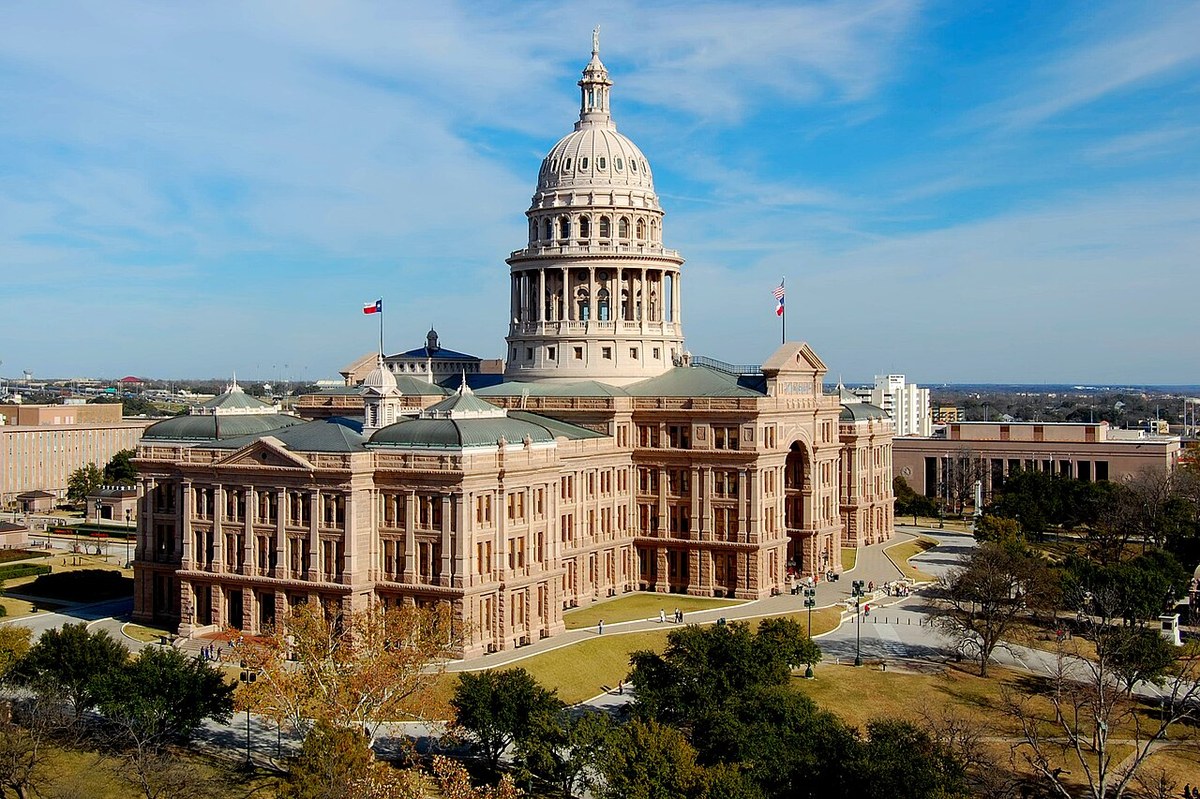
If you are mapping the city today, the Capitol dome in tourist photos is only a backdrop. The real coordinates are a vanished club on Congress, a Houston label’s battered LPs, Jim Franklin’s posters, and a documentary camera that, decades later, finally sat still long enough to watch what Texas did to one of its most gifted singers. Start with the music, then walk the history: Elevators first, Vulcan second, International Artists third — and keep the light-show image in mind whenever someone tells you psychedelia only happened in California.
Related: Roky Erickson & the 13th Floor Elevators · You’re Gonna Miss Me · Old Links & Press
Leave a Reply