Category: Psychedelic History

  • 1960s Psychedelic Concert Poster Art: From the Fillmore to Texas

    1960s Psychedelic Concert Poster Art: From the Fillmore to Texas

    The sound of mid-1960s psychedelic rock had a visual language, and most of it was printed to be stapled to a telephone pole. Concert posters from San Francisco’s Fillmore Auditorium and Avalon Ballroom — later joined by work from Austin rooms such as the Vulcan Gas Company — turned lettering into a maze, color into an optical trick, and a weekend bill into something you might keep after the show. Museums now collect them. Dealers grade them. The artists’ estates still hold copyrights. This article is a history of that movement, not a gallery of the posters themselves: we do not reproduce copyrighted 1960s concert art here.

    The posters matter to a music site because they were never only decoration. They told you who was playing, they trained the eye to expect a certain kind of night, and they traveled farther than many of the regional singles they advertised. When the 13th Floor Elevators played San Francisco, they entered a room that already had a house style on the wall. Back in Austin, a different group of artists built a Texas variant of the same idea. For the club-level story, see Austin’s 1960s psychedelic scene; for the wider city-to-city contrast, see San Francisco vs Austin.
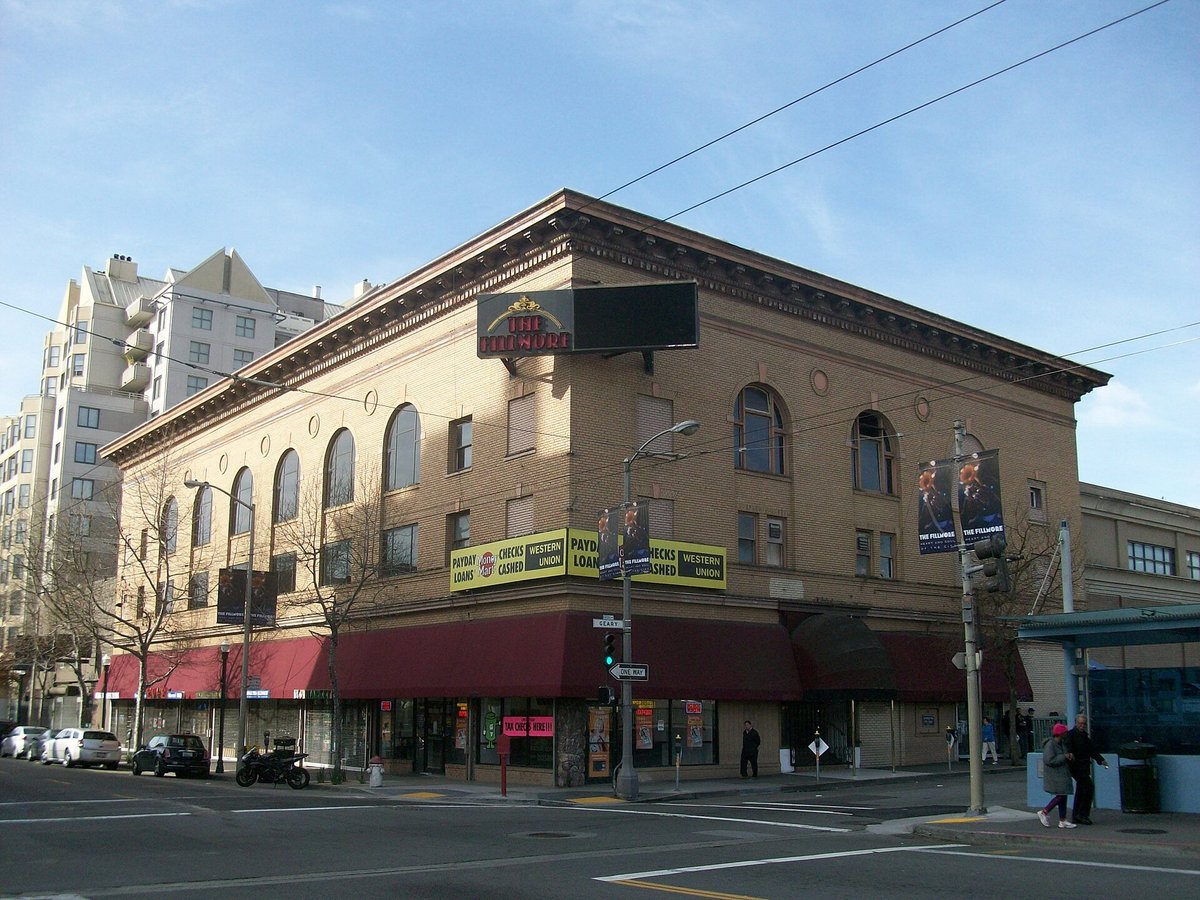
    The Fillmore Auditorium exterior in San Francisco
    Photo: total13. The Fillmore, San Francisco — CC BY 2.0 (via Wikimedia Commons).

    Two rooms, two numbering systems

    By 1966, San Francisco had two flagship psychedelic halls, and each generated a numbered poster series that collectors still use as a catalog. Bill Graham’s bills at the Fillmore Auditorium (and, later, related Graham venues) are commonly cited by their BG numbers. Chet Helms’s Family Dog productions at the Avalon Ballroom are cited by their FD numbers. The systems were practical before they were a hobby: they identified a specific weekend, a specific printer, and a first printing. Liquid light shows and dancing crowds finished the environment; the poster was the invitation you saw in daylight.

    The style that filled those numbered sheets did not come from nowhere. Designers borrowed from Art Nouveau, the Vienna Secession, comic art, advertising illustration, and, in more than one famous case, a nineteenth- or early-twentieth-century book plate that could be redrawn until it felt new. What was new was the density: lettering that seemed to melt, colors chosen to vibrate, and an almost willful refusal of the clean, high-contrast advertising style that had dominated mainstream posters.

    Wes Wilson, Bonnie MacLean, and the Fillmore look

    Wes Wilson is the artist most often credited with defining the early Fillmore poster. From early 1966 until May 1967 he designed bills for Graham in a style built around swollen, compressed lettering that made the names of the bands into a pattern as much as a text. Writers on the period, and later museum notes, have pointed to the influence of Vienna Secession lettering — especially the work of Alfred Roller — on that approach. Wilson left Graham’s operation after a dispute over payment. He died on January 24, 2020, at eighty-two.

    Bonnie MacLean, who had been part of Graham’s office world and was for a time married to him, became the Fillmore’s principal poster artist after Wilson’s departure. She designed many of the later 1960s Graham posters, carrying the house style forward with her own figures and lettering, and continued into the end of the decade. She died in 2020, the same year as Wilson. Any honest history of the Fillmore look has to include both names: the inventor of the early language, and the artist who kept the walls changing after he left.

    Moscoso, Mouse, Kelley, Griffin: the rest of the “Big Five”

    If Wilson made lettering feel organic, Victor Moscoso made color feel like a wiring problem. He had studied at Yale with Josef Albers, whose teaching on color interaction — including the way adjacent saturated hues can appear to vibrate — became the technical backbone of Moscoso’s mid-1960s posters. Working often under his Neon Rose imprint, he pushed complementary colors and almost unreadable lettering until the poster itself seemed to pulse. It was a rare case of an Ivy League color course walking straight into a ballroom.

    Stanley “Mouse” Miller and Alton Kelley, working as Mouse Studios, were the great collagists and recyclers of the group. Their 1966 Family Dog poster for the Grateful Dead and Oxford Circle at the Avalon, usually called “Skeleton and Roses” or “Skull and Roses,” adapted an illustration by Edmund J. Sullivan from a 1913 edition of The Rubaiyat of Omar Khayyam, adding color and lettering until the image became the Dead’s most durable visual emblem — later reused on the band’s 1971 live album. The move was typical of the scene at its smartest: an old plate, a new context, and a design that outlived the weekend it advertised.

    Rick Griffin arrived with a different toolbox. He was already known in Southern California surfing and underground-comic circles before becoming a San Francisco poster artist. His “Flying Eyeball” poster for a February 1968 Bill Graham bill — the Jimi Hendrix Experience, John Mayall & the Bluesbreakers, and Albert King, at the Fillmore and Winterland — is among the most famous single sheets of the era. Museum collections (including the Metropolitan Museum of Art and the Minneapolis Institute of Art) now hold impressions of it. The winged-eyeball motif itself drew on earlier hot-rod and Von Dutch imagery; Griffin’s contribution was to make that vernacular feel ceremonial.

    In July 1967, Wilson, Moscoso, Mouse, Kelley, and Griffin — the group later nicknamed the “Big Five” — showed together at the Joint Show at San Francisco’s Moore Gallery, a moment when ballroom advertising briefly entered the art-gallery circuit during the Summer of Love. MacLean is not usually counted in that five, which is one reason later exhibitions have had to work to put her back into the main narrative.

    Texas walls: Jim Franklin and the Vulcan

    Austin’s version of this culture was smaller and later. The Vulcan Gas Company opened at 316 Congress Avenue on October 27, 1967, and poster artist Jim Franklin joined that same month, even living in the building, as the Handbook of Texas records. The Vulcan’s light booth and Franklin’s posters gave Central Texas a visual identity that was related to San Francisco without being a copy of it — armadillos and a more local sense of humor would follow Franklin into the Armadillo World Headquarters years after the Vulcan closed around July 1970. The Elevators, already veterans of the Fillmore and Avalon, now had a hometown room with its own printed language. We go into the club’s history, and Houston’s International Artists label, in the Austin scene article; the point here is simpler: psychedelic poster art was not a California monopoly.

    Collecting posters without collecting trouble

    If you decide to collect, treat posters with the same discipline you would bring to scarce vinyl. First printings, later authorized reprints, and unauthorized copies can look similar in a thumbnail. Series numbers (BG, FD, and their Texas and other-city cousins), printer marks, paper stock, and documented measurements help, and so do dealers who photograph full margins rather than cropped images. Condition is its own vocabulary: original posters were hung outdoors, so pinholes, staple marks, and fading are common and should be described, not disguised.

    Copyright is not a technicality. Most 1960s concert posters remain under copyright, held by artists, estates, or publishers. Buying a legally offered original or authorized reprint is the ethical path; scanning a poster to decorate a website or a T-shirt without permission is not. Museum sites and library collections are the right places to study high-resolution images for research. We follow the same rule on RokyMovie: no copyrighted posters or film stills, only clearly free-licensed photographs, such as the Fillmore’s exterior above, or original art made for this site.

    The posters, like the records, are documents of a few short years when a concert advertisement could also be a new kind of American graphic art. Start with the rooms — Fillmore, Avalon, Vulcan — then the artists, then, if you collect, the paperwork. The music is still the reason the paper was printed. For the Texas band that walked into those San Francisco rooms, begin with Roky Erickson and the 13th Floor Elevators and You’re Gonna Miss Me.

    Related: Austin’s 1960s Psychedelic Scene · San Francisco vs Austin · You’re Gonna Miss Me · Old Links & Press

    Sources

  • San Francisco vs Austin: Two Psychedelic Rock Scenes of the 1960s

    San Francisco vs Austin: Two Psychedelic Rock Scenes of the 1960s

    Ask a casual listener where American psychedelic rock happened, and the answer is usually San Francisco: Haight-Ashbury, the Fillmore, the Avalon, liquid light, and a summer that magazines would not stop covering. That picture is not wrong. It is incomplete. In 1965, while the Bay Area’s ballroom culture was still taking shape, an Austin band led by a University of Texas philosophy student and a teenage singer from the Spades was already calling its sound psychedelic. The 13th Floor Elevators would soon travel west and play the same rooms that made the San Francisco scene famous. The traffic, in other words, went both ways — but the two cities were never the same kind of experiment.

    This is a comparison, not a contest. San Francisco had the infrastructure and the spotlight. Austin had a harder legal climate, a smaller circuit, and a Houston label that could get a single onto the national charts without ever resembling Warner Bros. or RCA. Understanding both is the best way to hear why the Elevators sounded like themselves, and why Keven McAlester’s You’re Gonna Miss Me is a Texas story rather than a Haight-Ashbury footnote.

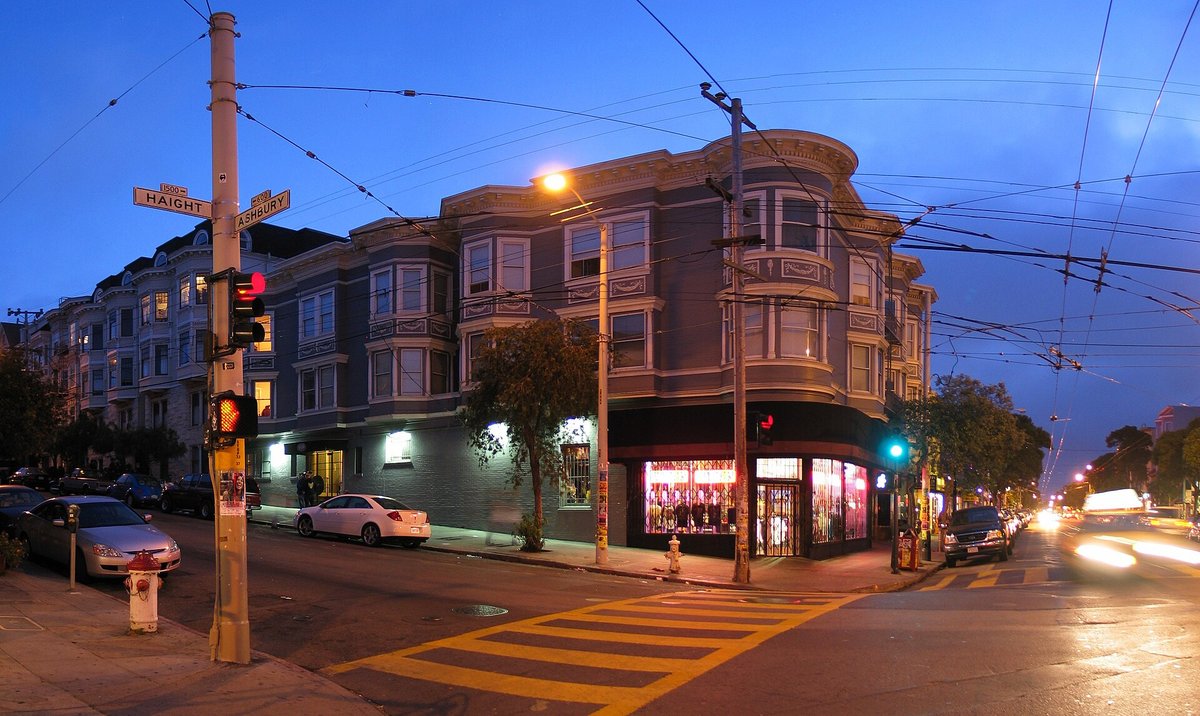
    The corner of Haight and Ashbury streets in San Francisco
    Photo: Daniel Schwen. Corner of Haight and Ashbury, San Francisco — CC BY-SA 2.5 (via Wikimedia Commons).

    Who got there first — and who got the cameras

    Chronology is less tidy than city pride likes to admit. San Francisco’s mid-1960s scene had deep folk, blues, and bohemian roots; by 1966 Bill Graham was presenting shows at the Fillmore Auditorium, and Chet Helms’s Family Dog was filling the Avalon Ballroom with dancing crowds, light shows, and a poster culture that became an art movement of its own. Jefferson Airplane had signed to RCA Victor in late 1965; the Grateful Dead were on Warner Bros. in time for a 1967 debut album. On January 14, 1967, the Human Be-In drew a crowd in the tens of thousands — contemporary and later estimates often range from 20,000 to 30,000 — to the Polo Fields in Golden Gate Park, a preview of the media storm that would be called the Summer of Love.

    Austin’s clock started just as early and ran on a different voltage. The Elevators formed in 1965. In November of that year, according to the Handbook of Texas, Tommy Hall began describing the band’s sound as psychedelic after encountering the word in Timothy Leary’s writings. “You’re Gonna Miss Me” became a national single on International Artists in mid-1966 and reached the mid-50s on the Billboard charts — proof that Texas could export the music before it had a ballroom built specifically for the culture around it. The Vulcan Gas Company, Austin’s essential psychedelic room, did not open at 316 Congress Avenue until October 27, 1967, after San Francisco’s summer in the headlines. For the club and the Houston label behind the Elevators, see our longer piece on Austin’s 1960s psychedelic scene.

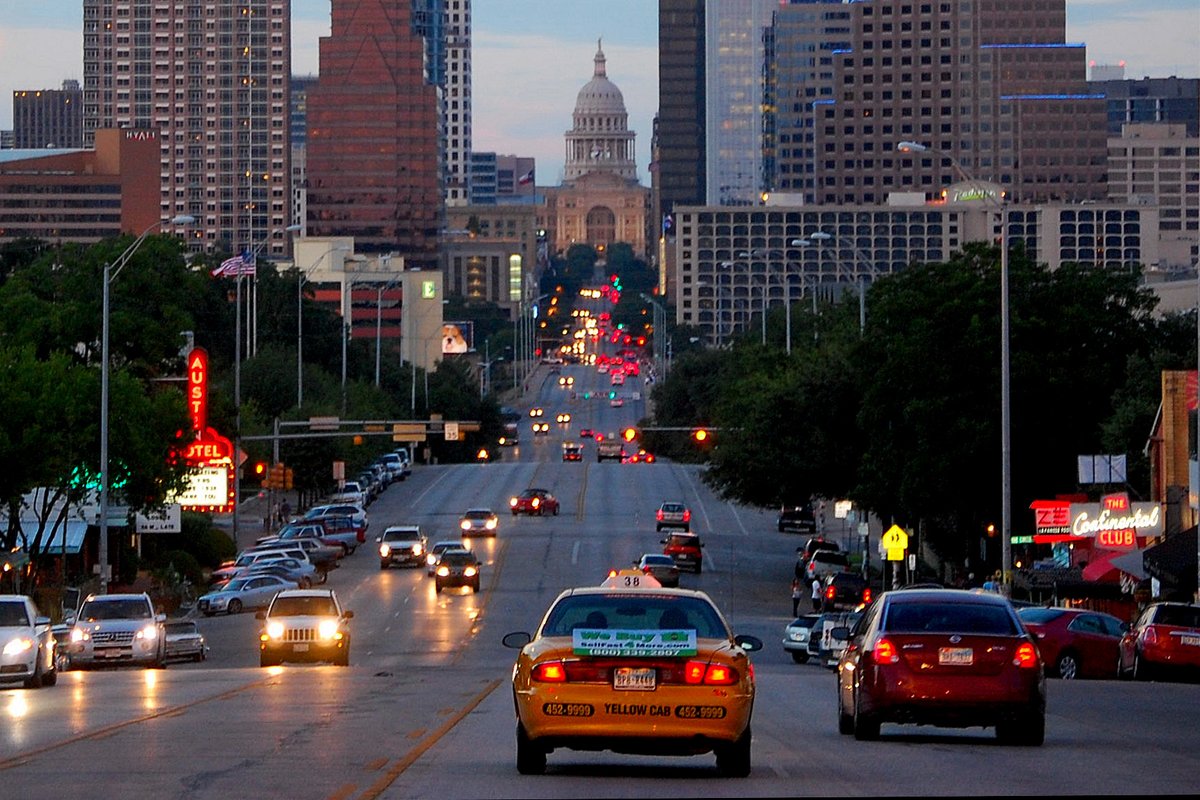
    Congress Avenue in Austin, Texas
    Photo: LoneStarMike. Congress Avenue, Austin — CC BY-SA 3.0 (via Wikimedia Commons).

    Rooms, labels, and the sound of a scene

    San Francisco had a pair of flagship halls with national reputations, a dense cluster of bands (the Dead, the Airplane, Big Brother and the Holding Company, Quicksilver Messenger Service, Country Joe and the Fish), and major-label contracts that could put a San Francisco album in every city with a record shop. The musical stereotype is not entirely a cartoon: folk roots, modal jamming, raga inflections, and long improvisations suited rooms where the light show and the dancing were part of the event. There were tighter, song-based Bay Area groups too, but the national image favored the jam.

    Austin’s scene was smaller, more closely watched, and braided with Texas garage, folk, and blues traditions that never fully left the room. The Elevators attacked like a garage band and thought like a philosophy seminar; Hall’s electric jug made them instantly recognizable and impossible to mistake for a Fillmore dance band. International Artists, based in Houston rather than Austin, issued a modest run of albums and singles — the Elevators, the Red Crayola/Red Krayola, Golden Dawn, Bubble Puppy, a Lightnin’ Hopkins LP — without the corporate depth of RCA or Warner. The music traveled. The business often did not. That difference in scale is easy to hear even now: one scene documented by a small army of photographers, poster artists, and label publicists; the other reconstructed later from battered IA pressings, club memories, and a documentary camera that arrived decades after the fact.

    The crossing: Elevators west, Joplin west, and a few shared bills

    The two worlds did meet. As the Elevators’ single rose, the band toured the West Coast. Benny Thurman stayed in Texas; Ronnie Leatherman took over on bass. The Handbook of Texas records that they were especially well received in the Bay Area, playing the Avalon and the Fillmore as well as smaller rooms, and appearing with acts such as the Grateful Dead, Moby Grape, and Big Brother and the Holding Company. A Family Dog poster now in the Fine Arts Museums of San Francisco collection advertises the Elevators with Moby Grape at the Avalon on November 11 and 12, 1966 — physical evidence of a Texas band on a San Francisco wall. They also reached national television (American Bandstand, Where the Action Is).

    Janis Joplin moved in the other direction. Raised in Port Arthur, Texas, and active in the Austin folk scene, she settled in San Francisco and became the voice of Big Brother. Amy Berg’s later documentary Janis: Little Girl Blue traces that path in detail. The Handbook of Texas notes, carefully, that the Elevators had reportedly asked Joplin to join them, and that she declined while acknowledging the band’s influence. Whether or not every retelling of that offer is complete, the larger fact is solid: talented Texans were looking at the same horizon, and only some of them could make a living inside Texas.

    Police, press, and what happened after the peak

    San Francisco was never unpoliced, and the media rush of 1967 brought its own damage — overcrowding, exploitation, and a short shelf life for the neighborhood’s myth. The Avalon lost its lease in 1968. The decade’s Bay Area aftertaste includes Altamont in December 1969, a widely cited symbol of the era’s souring, even if no single concert can end a culture by itself. Still, for a few years the city offered something Austin could not: a concentration of venues, audiences, and press that made psychedelic rock look like the center of American youth culture.

    Austin offered the opposite pressure. The Elevators’ open drug advocacy drew Texas Rangers and radio bans; a 1966 marijuana case saw some charges dropped on a technicality while other members received suspended sentences. In 1969 Erickson, facing a substantial prison term after another marijuana arrest, chose commitment at Rusk State Hospital for the Criminally Insane. The band effectively ended there. The Vulcan, which had imported a San Francisco-style understanding of lights, posters, and an altered audience, was itself a police target and closed around July 1970. The energy mutated into the Armadillo World Headquarters era, later Austin punk, and, much later, a neo-psych circuit that still treats Erickson as a local saint. Our Elevators reference page and the documentary You’re Gonna Miss Me pick up that human cost in closer detail.

    What to hold onto from the comparison

    If you want the mass-cultural image of psychedelia — the neighborhood, the festival, the major-label album, the poster in the museum — you start in San Francisco. If you want to understand how early, and how unforgiving, the same impulse could be in America, you start in Austin. The Elevators did not need California’s permission to use the word “psychedelic,” but they did need California’s stages to show that a Texas band belonged in the same conversation as the Dead or Moby Grape. Joplin’s career shows the reverse gravitational pull: a Texas voice that became, for the rest of the world, a San Francisco story.

    Neither city owns the era. The useful habit is to keep both maps open: Haight and Ashbury in one window, Congress Avenue in the other, and the records in between. For the visual language of the ballrooms, see our companion piece on 1960s psychedelic concert poster art.

    Related: Austin’s 1960s Psychedelic Scene · Roky Erickson & the 13th Floor Elevators · You’re Gonna Miss Me · Old Links & Press

    Sources

  • The Story of Nuggets: How a 1972 Compilation Rewrote Garage and Psychedelic Rock

    The Story of Nuggets: How a 1972 Compilation Rewrote Garage and Psychedelic Rock

    By 1972, the mid-1960s explosion of American garage bands already felt like ancient radio. FM albums were getting longer; AM singles that had flared for a few weeks were being deleted, forgotten, or sold for pennies in used bins. Elektra Records founder Jac Holzman asked a New York writer and record-shop clerk named Lenny Kaye to assemble a list of those disappearing tracks. The result, released on October 2, 1972, was a double LP with a deliberately misspelled subtitle: Nuggets: Original Artyfacts from the First Psychedelic Era, 1965–1968.

    It was not a greatest-hits package of the Summer of Love, and it was not a Texas history lesson. It was something rarer: a carefully sequenced argument that the mid-1960s American underground — fuzz guitar, Farfisa organ, regional hits, and a handful of genuine chart smashes — deserved to be heard as a body of work. Among its 27 songs was the 13th Floor Elevators’ “You’re Gonna Miss Me,” the Austin single that had already become the calling card of Roky Erickson and the Elevators. Half a century later, Nuggets is still the map many listeners use to find that world.

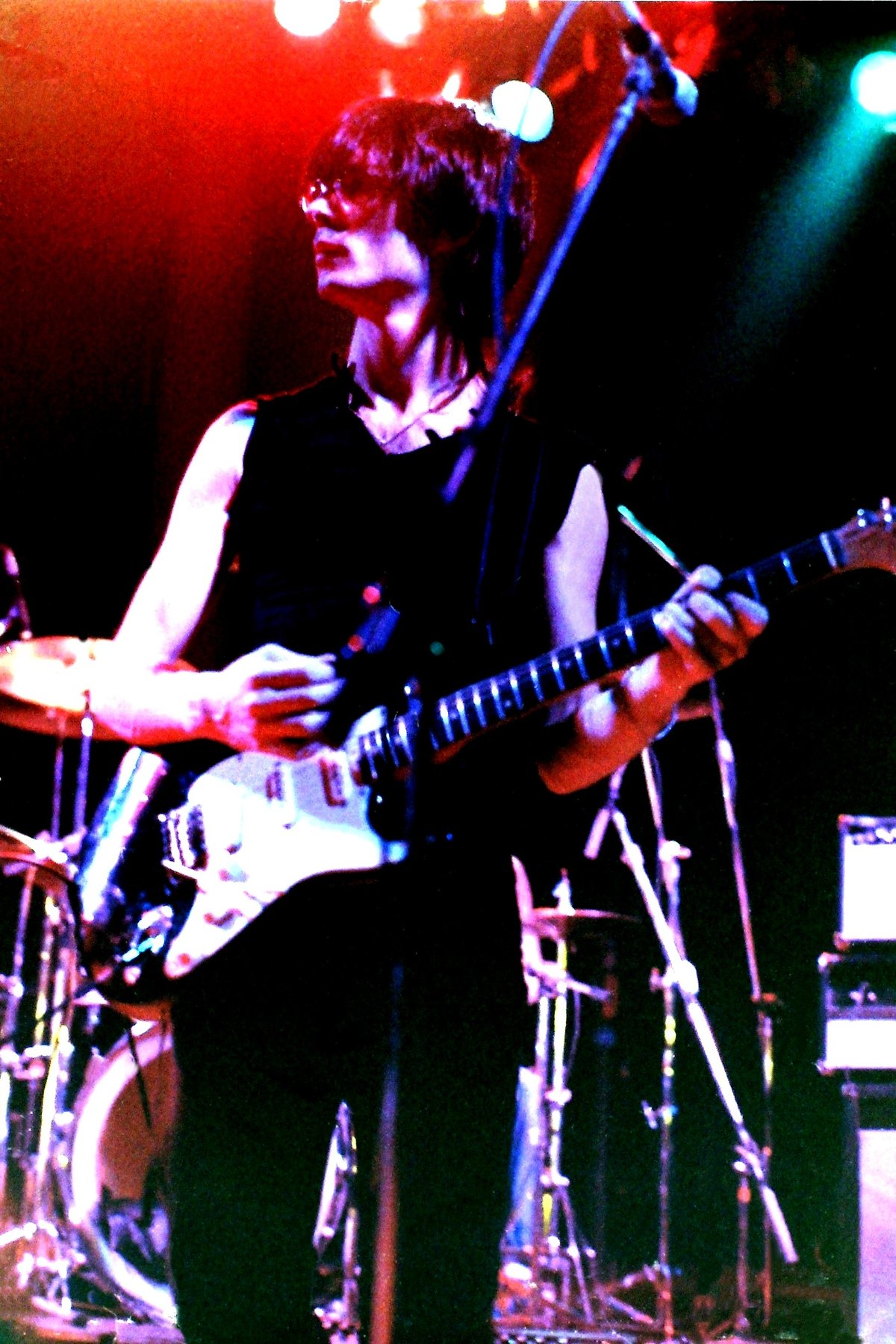
    Lenny Kaye playing guitar with the Patti Smith Group in 1978
    Photo: Klaus Hiltscher. Lenny Kaye with the Patti Smith Group, 1978 — CC BY-SA 2.0 (via Wikimedia Commons).

    A clerk, a label head, and a double album

    Kaye was working at Village Oldies in New York and writing about rock when Holzman pulled him into Elektra. In later interviews, including an NPR conversation on the compilation’s fiftieth anniversary, Kaye recalled being asked to assemble a list of songs — the kind of record that had slipped under the radar or been overlooked as an album track. Holzman called them nuggets. Kaye came back with a long list; the finished album held 27 cuts.

    The original plan was more ambitious still. Kaye later said the project had been conceived as a series of roughly eight regional LPs. Elektra persuaded him that one double album would be easier to sell. A lawyer, Michael Kapp, was hired to track down rights. Even then, licensing was messy enough that a planned second Elektra volume never appeared, though Kaye kept lists of songs he had hoped to include. Those “might-have-beens” would surface, in different shapes, on later Rhino editions.

    What the original 27 tracks actually were

    Nuggets opens with the Electric Prunes’ “I Had Too Much to Dream (Last Night)” and the Standells’ “Dirty Water,” then threads through the Knickerbockers, the Seeds’ “Pushin’ Too Hard,” Count Five’s “Psychotic Reaction,” the Leaves’ “Hey Joe,” the Chocolate Watchband, Todd Rundgren’s early band Nazz, and, on side two, the Elevators. The set is often remembered as a stash of one-hit wonders. That memory is only half true. Mark Deming, writing for AllMusic, and later notes around the 1998 box set have pointed out that a substantial share of the original program had been American Top 40 material. The compilation’s real trick was juxtaposition: national hits next to regional cult records, all framed as evidence of one brief, combustible era.

    The Elevators’ placement matters. “You’re Gonna Miss Me,” written by Erickson and first cut with his earlier Austin group the Spades, had been re-recorded with Tommy Hall’s electric jug and issued nationally on Houston’s International Artists; it reached the mid-50s on the Billboard charts in 1966. On Nuggets it sits not as a Texas footnote but as a peer of the California and Midwest garage singles that radio remembered more easily. For a fuller account of how that record was made, see our history of the Elevators and the electric jug and the documentary page for You’re Gonna Miss Me.

    Kaye has been frank, in later interviews, that the finished album was broader than the “garage rock” category listeners now project onto it. Studio-minded tracks such as Sagittarius’ “My World Fell Down” sit beside rawer fuzz workouts. The word “garage” does not appear in his original liner notes. The phrase he did use — “punk rock” — is now cited as one of the earliest published appearances of the term, years before it named a mid-1970s movement. Kaye would soon become lead guitarist in the Patti Smith Group, which makes the 1972 compilation look, in hindsight, like a bridge rather than a museum piece.

    Sire, Pebbles, and a cottage industry of crate-digging

    Elektra did not turn Nuggets into an immediate franchise. Sire Records reissued the double album in 1976 with a new cover, just as a new generation of bands was scavenging mid-1960s singles for speed, sneer, and short-song discipline. Punk-era listeners treated the compilation as a usable past, not as nostalgia wallpaper.

    Other compilers went further into the weeds. The first Pebbles LP appeared in 1978 (a limited Mastercharge pressing is often cited), and the series — closely associated with collector and Bomp! Records founder Greg Shaw — stretched across many later volumes of even more obscure regional recordings. Similar anthologies, including the Rubble and Back from the Grave series, followed the same instinct: if Nuggets had proved the bins still hid classics, maybe the next classic was on a private-press 45 from a town no major label had ever visited. A small-label economy grew up around that idea, with all the blessings and pitfalls of unofficial reissues that collectors still have to navigate.

    The Rhino era, and a second life on CD and vinyl

    In the 1980s, Rhino Records built a fifteen-part Nuggets series of albums organized by style or region. In 1998 the label issued the definitive-feeling 4-CD box: the original 27 tracks, in original order, plus 91 additional mid-1960s American recordings — 118 songs in all. That set folded in records that had become garage-canon after 1972, from the Music Machine’s “Talk Talk” and the Sonics’ “Strychnine” to Love’s “7 and 7 Is,” and it also made room for outright smashes such as Strawberry Alarm Clock’s “Incense and Peppermints.”

    Rhino then widened the map. Nuggets II: Original Artyfacts from the British Empire and Beyond, 1964–1969 (2001) looked outside the United States, to the Pretty Things, the Easybeats, Os Mutantes, and other scenes. Children of Nuggets (2005) collected later bands that had treated the original set as a style manual. Scene-specific boxes followed, including Love Is the Song We Sing: San Francisco Nuggets 1965–1970 (2007) and Where the Action Is! Los Angeles Nuggets: 1965–1968 (2009). In 2012 the original album was remastered again from the 1972 tapes; in 2023 Rhino marked the project’s fiftieth anniversary with a 5-LP box that finally presented a Lenny Kaye-compiled Nuggets, Volume 2, built from songs he had earmarked in the early 1970s, plus a further disc of near-misses titled Also Dug-Its.

    Why Nuggets still matters on a Texas psych site

    For RokyMovie readers, Nuggets is more than a collector’s totem. It is one of the main reasons a 1966 International Artists single stayed in circulation for people who had never set foot in Austin. It placed the Elevators inside a national conversation about garage and psychedelia, and it did so in 1972 — after the band had collapsed, and long before Keven McAlester’s documentary or the later reissue boom made Erickson’s story widely visible. If you are just beginning to collect the records themselves, start with a legal, well-mastered edition of Nuggets and then read our guide to collecting 1960s psychedelic vinyl.

    The compilation is also a reminder to be precise about language. “Psychedelic era,” in Kaye’s subtitle, covers a lot of American music that was rawer, funnier, and more regional than the San Francisco poster in the dorm-room imagination. The Elevators belong on that map. So do dozens of bands who never got a second single. The job Nuggets assigned itself — to listen again, and to take three-minute records seriously — is still the right way into the period.

    Related: You’re Gonna Miss Me · Roky Erickson & the 13th Floor Elevators · The 13th Floor Elevators and the Electric Jug · How to Start Collecting 1960s Psychedelic Vinyl · Old Links & Press

    Sources

  • Austin’s 1960s Psychedelic Scene: Vulcan Gas Company and International Artists

    San Francisco gets the mythology. London gets the fashion spreads. Austin, in the late 1960s, got something quieter and stranger: a teenage screamer from Travis High, a UT philosophy student with an electric jug, a Houston label that barely knew how to run a business, and a Congress Avenue club whose light booth held eight slide projectors and three overheads. Together they made Central Texas a genuine node of psychedelic rock — not a satellite of California, but a scene with its own temperature, police pressure, and unfinished business.

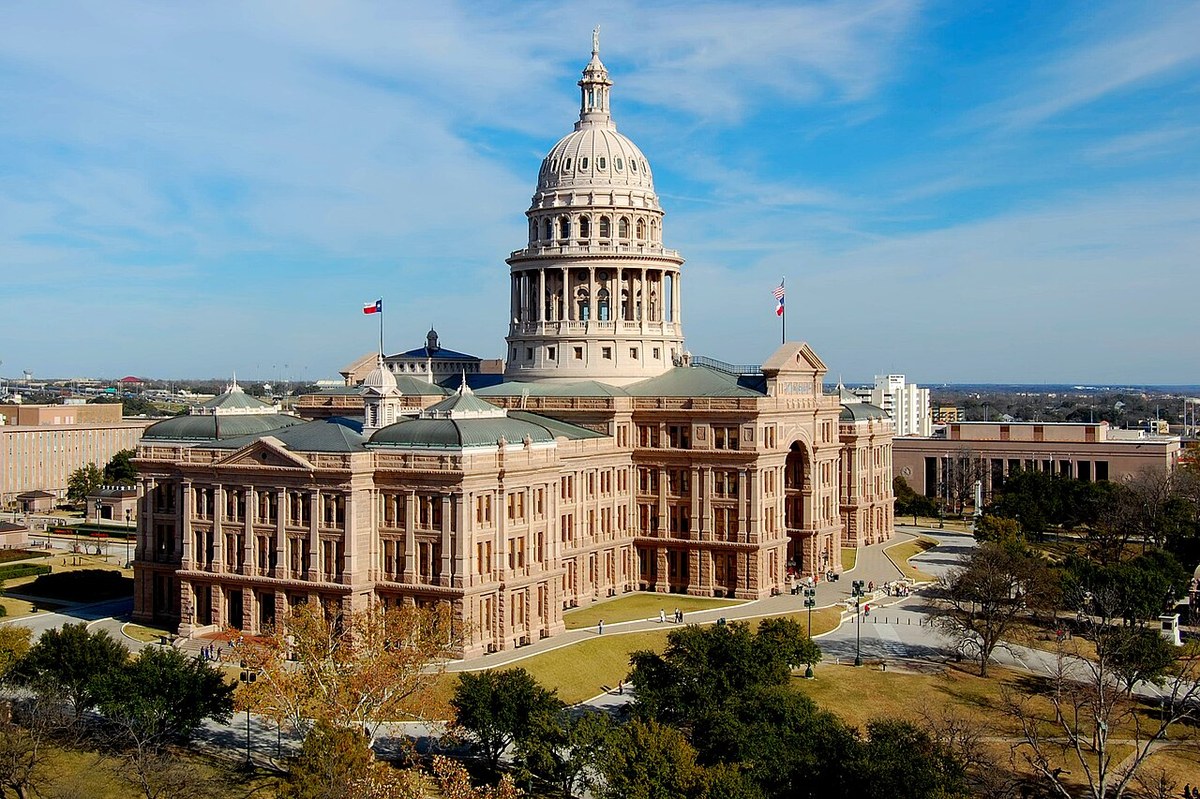
    Texas State Capitol in Austin
    Photo: LoneStarMike. Texas State Capitol, Austin — CC BY 3.0 (via Wikimedia Commons).

    Before the Vulcan: Elevators as proof of concept

    By the time the Vulcan Gas Company opened in October 1967, the 13th Floor Elevators had already taken Austin’s psychedelic experiment national. Formed in 1965, they scored a mid-chart Billboard hit with “You’re Gonna Miss Me,” played the Fillmore and Avalon, and released The Psychedelic Sounds of the 13th Floor Elevators on Houston’s International Artists. Their story — summarized on our Elevators page and in You’re Gonna Miss Me — proved that Texas could export the sound. What Austin still needed was a room built for the culture around it: lights, posters, original bands, and an audience willing to skip Top 40 covers.

    Vulcan Gas Company, 316 Congress Avenue

    According to the Handbook of Texas, Houston White, Gary Maxwell, Don Hyde, and Sandy Lockett opened the Vulcan on October 27, 1967; poster artist Jim Franklin joined that same month and even lived in the building — winters behind the office, summers in a loft near a skylight. The club sat at 316 Congress Avenue — then a low-rent stretch of a grand street — and ran until around July 1970, closing about a month before Armadillo World Headquarters opened. Contemporary accounts also mention a cistern beneath the building that musicians used for echo experiments, and storefront windows dressed with mannequins and light for sidewalk peeping.

    The Vulcan’s brief was simple and radical for Top-40 Texas: original counterculture music. A platform along the east wall held eight slide projectors, three overhead projectors, and other effects gear. Liquid projection and clock crystals filled with colored oil turned the northwest-corner stage into what period descriptions called a “living canvas.” Bands and players associated with the room included the Elevators, Shiva’s Headband, the Conqueroo, Canned Heat, Doug Sahm, Angela Strehli, Johnny Winter, and a young Stevie Ray Vaughan. Don Hyde, who had traded for a cache of White Lightning LSD connected to the Human Be-In era, helped import a San Francisco-style understanding that lights and music hit differently when the audience was altered — an open secret that delighted regulars and alarmed City Hall.

    The same openness that made the Vulcan magnetic also made it a police target. Crowds who would not pay the modest cover (about $1.50) lingered in the doorway; street dealing and rowdy sidewalks invited sweeps across Congress and into the club. Franklin reportedly floated renaming the room the Armadillo Gas Company to cool the heat — a failed rebrand that nonetheless seeded the armadillo mascot of Armadillo World Headquarters, later shaped by Franklin and Eddie Wilson.

    International Artists: Houston money, Texas psych

    International Artists Producing Corporation was a Houston company, not an Austin one — an important geographic detail often blurred in fan lore. Founded in 1965 and active through about 1970, IA issued roughly a dozen albums and around forty singles. Early releases wandered through surf, country, and pop. Then IA single 107 — the Elevators’ “You’re Gonna Miss Me” — became the breakthrough. Lelan Rogers joined to push national promotion; later Ray Rush handled A&R. By 1968 the corporation had brought in investor J. L. Patterson, purchased Houston’s Gold Star Studios facility, and begun a spiral of mergers and plant purchases that ended in bankruptcy.

    IA’s roster still reads like a secret history of Texas rock: the Elevators (four albums), Red Crayola/Red Krayola, Golden Dawn, Lost and Found, Endle St. Cloud, Thursday’s Children, Bubble Puppy (whose “Hot Smoke & Sasafrass” out-charted the Elevators’ hit and earned gold-record status), plus a Lightnin’ Hopkins album that kept the label tied to Houston blues. Business judgment rarely matched musical taste. Artists warned one another about the contracts; Bubble Puppy members later recalled Elevators advice to stay away. The tapes and pressings outlived the corporation.

    What “Austin psychedelic” actually meant

    Unlike the Haight, Austin’s scene was small, surveilled, and braided with blues and folk traditions that never fully left the room. The Elevators mixed garage attack with Hall’s philosophical lyrics; the Vulcan hosted hippie blues beside experimental rock; IA taped both avant-noise and regional R&B. When the Vulcan closed and the Elevators collapsed into legal and medical crisis, the energy did not vanish — it mutated into the Armadillo era, Austin punk, SXSW folklore, and much later the neo-psych of bands who still treat Roky Erickson as a local saint.

    If you are mapping the city today, the Capitol dome in tourist photos is only a backdrop. The real coordinates are a vanished club on Congress, a Houston label’s battered LPs, Jim Franklin’s posters, and a documentary camera that, decades later, finally sat still long enough to watch what Texas did to one of its most gifted singers. Start with the music, then walk the history: Elevators first, Vulcan second, International Artists third — and keep the light-show image in mind whenever someone tells you psychedelia only happened in California.

    Related: Roky Erickson & the 13th Floor Elevators · You’re Gonna Miss Me · Old Links & Press

    Sources

  • The 13th Floor Elevators and the Electric Jug

    Before “psychedelic rock” was a bin card in record stores, it was a word Tommy Hall borrowed from Timothy Leary’s writings and applied to a brand-new Austin band. The 13th Floor Elevators formed in 1965 around Hall’s lyrics and electric jug, Stacy Sutherland’s lead guitar, a rhythm section drawn from the coastal Texas group the Lingsmen, and Roger Kynard “Roky” Erickson — still a teenager — who left the Spades to sing and play rhythm guitar. Within a year they had a national single, a provocatively titled debut album, and the attention of both San Francisco ballroom bookers and Texas law enforcement.

    What made them unmistakable was not only Erickson’s shredded, gospel-fierce voice. It was the jug: a clay whiskey vessel that Hall treated as an amplifier for the human voice rather than as a folk bass substitute. For a deeper portrait of Erickson after the Elevators, see Roky Erickson & the 13th Floor Elevators and the documentary guide You’re Gonna Miss Me.

    The 13th Floor Elevators in the 1960s
    The 13th Floor Elevators, 1960s. Published in Not Fade Away (Fall 1975). Public domain (via Wikimedia Commons).

    Naming a sound — and a band

    Hall was a University of Texas student working through philosophy, psychology, and chemical engineering when he began assembling the group. Clementine Hall reportedly suggested the name 13th Floor Elevators: American high-rises often skip a labeled thirteenth floor, so the phrase implied travel to another level of consciousness. Others have linked the “thirteenth” to the letter M and marijuana. In November 1965 Hall began describing the band’s sound as psychedelic — garage rock braided with folk, R&B, and lyrics shaped by hallucinogenic experience — and Erickson’s screaming lead vocals finished the argument.

    Why the jug sounded like nothing else

    Traditional jug-band players blow across the opening to produce a low, tuba-like thump. Hall did something else. He vocalized melodic runs into the mouth of the jug, using the clay chamber for resonance, echo, and distortion. Live, he held a microphone to the jug’s opening; when recording Easter Everywhere, engineers reportedly placed a microphone inside the jug to exaggerate the effect. The result sat somewhere between a cuíca, an early synthesizer, and a human voice trapped in pottery — a signature that no cover band could fake with a guitar pedal alone.

    Hall was frank, in later interviews, about why he invented it. He did not consider himself a conventional musician. He wanted a place onstage so he could deliver lyrics shaped by study and LSD experience. The jug was a tool of presence as much as of timbre: a way for the band’s resident theorist to stand inside the music instead of only writing it.

    From Contact Records to International Artists

    Erickson’s earlier band, the Spades, had already cut “You’re Gonna Miss Me” for Austin’s Zero Records. The Elevators re-recorded it harder, closer to the Kinks and Stones energy they admired, and issued it with “Tried to Hide” on the small Contact label. Regional television followed — including Dallas’s Sump’n Else and Houston’s Larry Kane Show. Houston’s International Artists soon signed the group, hired Lelan Rogers (brother of Kenny Rogers) for promotion and production, and re-released the single nationally in mid-1966. It became the band’s biggest commercial moment, reaching the mid-50s on the Billboard charts (Handbook of Texas cites number 56).

    The debut LP, The Psychedelic Sounds of the 13th Floor Elevators (November 1966), announced the aesthetic in its title. The follow-up, Easter Everywhere (1967), is often cited by fans and historians as a high-water mark of American psychedelia — denser, more exploratory, still anchored by Erickson’s voice and Hall’s jug. A 1968 “live” album padded with studio outtakes and dubbed applause disappointed commercially. Bull of the Woods (January 1969) leaned on Sutherland’s writing and was finished without Erickson’s full participation as the singer’s legal and medical crises consumed the band.

    West Coast heat, Texas heat

    Success pulled the Elevators to San Francisco ballrooms — the Fillmore Auditorium, the Avalon Ballroom — and onto national television (American Bandstand, Where the Action Is). They shared bills with acts such as the Grateful Dead, Moby Grape, and Big Brother and the Holding Company. Bassist Benny Thurman stayed in Texas; Ronnie Leatherman stepped in. Back home, open drug advocacy and marijuana arrests brought Texas Rangers and radio bans. In one 1966 case, charges against Walton and Erickson were dropped on a technicality while Sutherland and Hall received suspended sentences. Public pressure later eased some radio blacklists, but the pattern was set: the band’s philosophy made them a law-enforcement target in a state that did not romanticize the counterculture.

    Lineup churn followed. In summer 1967 Walton and Leatherman left; Danny Thomas (drums/piano) and Dan Galindo (bass) arrived. Touring contracted toward Texas as legal and personal problems mounted. Erickson’s 1969 marijuana arrest — not his first — led him to choose commitment at Rusk State Hospital for the Criminally Insane over a long prison term. The Elevators effectively ended there. Hall eventually returned to San Francisco; most other members stayed in Texas. Sutherland was fatally shot by his wife in 1978. Surviving members reconvened in fragments over the decades, including a May 10, 2015 Levitation (Austin Psych Fest) anniversary set with Erickson, Hall, Walton, and Leatherman.

    What the Elevators left behind

    Influence lists are easy to inflate, but the Elevators’ documented admirers and legatees are real: Texas punk and neo-psych scenes, artists who covered Erickson on the 1990 Sire tribute Where the Pyramid Meets the Eye, and later musicians from Robert Plant to the White Stripes who publicly acknowledged the debt. International Artists’ 2009 box set Sign of the 3 Eyed Men and Paul Drummond’s biography Eye Mind gave historians a denser archive. The electric jug remains the easiest shorthand for their difference — a reminder that psychedelia was not only fuzz pedals and sitars. Sometimes it was a philosophy student singing into a jug so the words would leave the room changed.

    Related: Roky Erickson & the 13th Floor Elevators · You’re Gonna Miss Me

    Sources