Tag: psychedelic rock

  • San Francisco vs Austin: Two Psychedelic Rock Scenes of the 1960s

    San Francisco vs Austin: Two Psychedelic Rock Scenes of the 1960s

    Ask a casual listener where American psychedelic rock happened, and the answer is usually San Francisco: Haight-Ashbury, the Fillmore, the Avalon, liquid light, and a summer that magazines would not stop covering. That picture is not wrong. It is incomplete. In 1965, while the Bay Area’s ballroom culture was still taking shape, an Austin band led by a University of Texas philosophy student and a teenage singer from the Spades was already calling its sound psychedelic. The 13th Floor Elevators would soon travel west and play the same rooms that made the San Francisco scene famous. The traffic, in other words, went both ways — but the two cities were never the same kind of experiment.

    This is a comparison, not a contest. San Francisco had the infrastructure and the spotlight. Austin had a harder legal climate, a smaller circuit, and a Houston label that could get a single onto the national charts without ever resembling Warner Bros. or RCA. Understanding both is the best way to hear why the Elevators sounded like themselves, and why Keven McAlester’s You’re Gonna Miss Me is a Texas story rather than a Haight-Ashbury footnote.
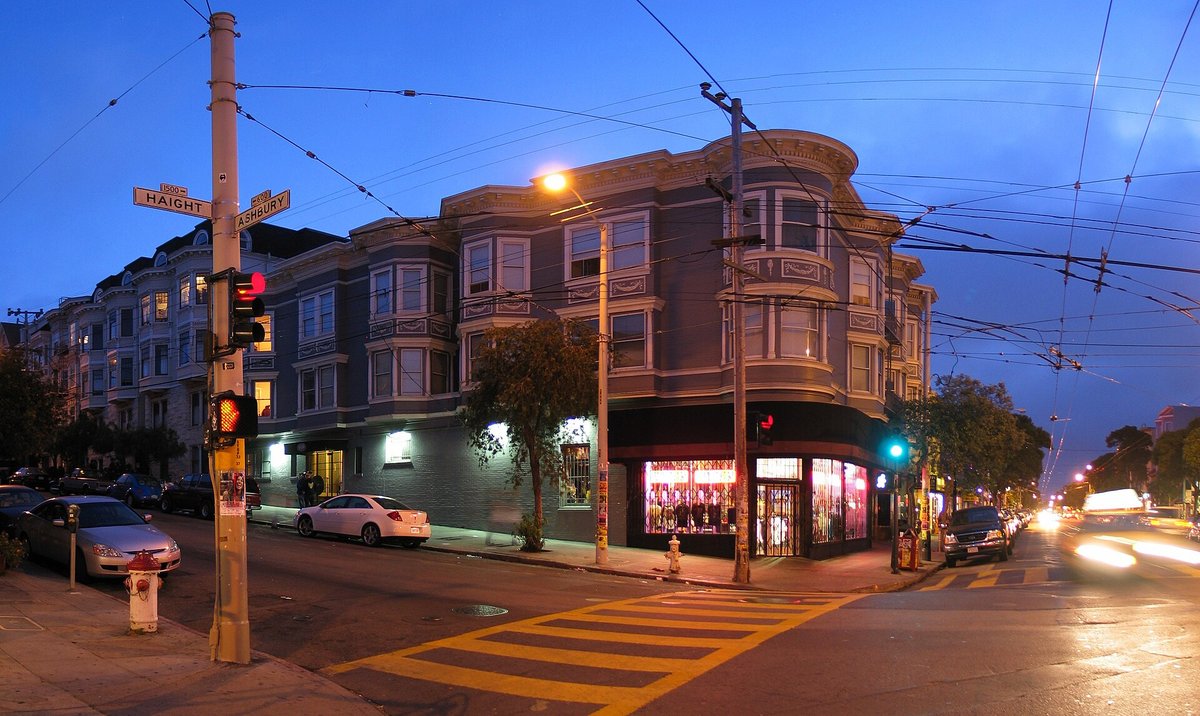
    The corner of Haight and Ashbury streets in San Francisco
    Photo: Daniel Schwen. Corner of Haight and Ashbury, San Francisco — CC BY-SA 2.5 (via Wikimedia Commons).

    Who got there first — and who got the cameras

    Chronology is less tidy than city pride likes to admit. San Francisco’s mid-1960s scene had deep folk, blues, and bohemian roots; by 1966 Bill Graham was presenting shows at the Fillmore Auditorium, and Chet Helms’s Family Dog was filling the Avalon Ballroom with dancing crowds, light shows, and a poster culture that became an art movement of its own. Jefferson Airplane had signed to RCA Victor in late 1965; the Grateful Dead were on Warner Bros. in time for a 1967 debut album. On January 14, 1967, the Human Be-In drew a crowd in the tens of thousands — contemporary and later estimates often range from 20,000 to 30,000 — to the Polo Fields in Golden Gate Park, a preview of the media storm that would be called the Summer of Love.

    Austin’s clock started just as early and ran on a different voltage. The Elevators formed in 1965. In November of that year, according to the Handbook of Texas, Tommy Hall began describing the band’s sound as psychedelic after encountering the word in Timothy Leary’s writings. “You’re Gonna Miss Me” became a national single on International Artists in mid-1966 and reached the mid-50s on the Billboard charts — proof that Texas could export the music before it had a ballroom built specifically for the culture around it. The Vulcan Gas Company, Austin’s essential psychedelic room, did not open at 316 Congress Avenue until October 27, 1967, after San Francisco’s summer in the headlines. For the club and the Houston label behind the Elevators, see our longer piece on Austin’s 1960s psychedelic scene.
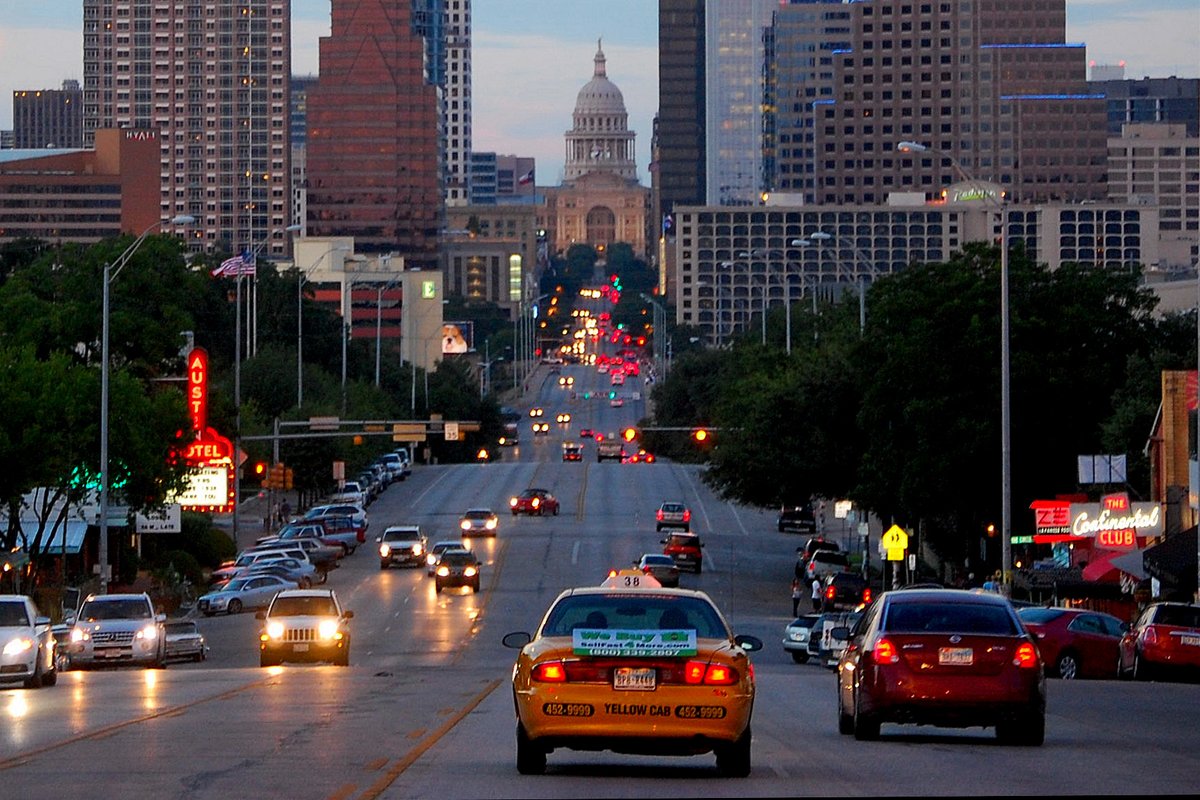
    Congress Avenue in Austin, Texas
    Photo: LoneStarMike. Congress Avenue, Austin — CC BY-SA 3.0 (via Wikimedia Commons).

    Rooms, labels, and the sound of a scene

    San Francisco had a pair of flagship halls with national reputations, a dense cluster of bands (the Dead, the Airplane, Big Brother and the Holding Company, Quicksilver Messenger Service, Country Joe and the Fish), and major-label contracts that could put a San Francisco album in every city with a record shop. The musical stereotype is not entirely a cartoon: folk roots, modal jamming, raga inflections, and long improvisations suited rooms where the light show and the dancing were part of the event. There were tighter, song-based Bay Area groups too, but the national image favored the jam.

    Austin’s scene was smaller, more closely watched, and braided with Texas garage, folk, and blues traditions that never fully left the room. The Elevators attacked like a garage band and thought like a philosophy seminar; Hall’s electric jug made them instantly recognizable and impossible to mistake for a Fillmore dance band. International Artists, based in Houston rather than Austin, issued a modest run of albums and singles — the Elevators, the Red Crayola/Red Krayola, Golden Dawn, Bubble Puppy, a Lightnin’ Hopkins LP — without the corporate depth of RCA or Warner. The music traveled. The business often did not. That difference in scale is easy to hear even now: one scene documented by a small army of photographers, poster artists, and label publicists; the other reconstructed later from battered IA pressings, club memories, and a documentary camera that arrived decades after the fact.

    The crossing: Elevators west, Joplin west, and a few shared bills

    The two worlds did meet. As the Elevators’ single rose, the band toured the West Coast. Benny Thurman stayed in Texas; Ronnie Leatherman took over on bass. The Handbook of Texas records that they were especially well received in the Bay Area, playing the Avalon and the Fillmore as well as smaller rooms, and appearing with acts such as the Grateful Dead, Moby Grape, and Big Brother and the Holding Company. A Family Dog poster now in the Fine Arts Museums of San Francisco collection advertises the Elevators with Moby Grape at the Avalon on November 11 and 12, 1966 — physical evidence of a Texas band on a San Francisco wall. They also reached national television (American Bandstand, Where the Action Is).

    Janis Joplin moved in the other direction. Raised in Port Arthur, Texas, and active in the Austin folk scene, she settled in San Francisco and became the voice of Big Brother. Amy Berg’s later documentary Janis: Little Girl Blue traces that path in detail. The Handbook of Texas notes, carefully, that the Elevators had reportedly asked Joplin to join them, and that she declined while acknowledging the band’s influence. Whether or not every retelling of that offer is complete, the larger fact is solid: talented Texans were looking at the same horizon, and only some of them could make a living inside Texas.

    Police, press, and what happened after the peak

    San Francisco was never unpoliced, and the media rush of 1967 brought its own damage — overcrowding, exploitation, and a short shelf life for the neighborhood’s myth. The Avalon lost its lease in 1968. The decade’s Bay Area aftertaste includes Altamont in December 1969, a widely cited symbol of the era’s souring, even if no single concert can end a culture by itself. Still, for a few years the city offered something Austin could not: a concentration of venues, audiences, and press that made psychedelic rock look like the center of American youth culture.

    Austin offered the opposite pressure. The Elevators’ open drug advocacy drew Texas Rangers and radio bans; a 1966 marijuana case saw some charges dropped on a technicality while other members received suspended sentences. In 1969 Erickson, facing a substantial prison term after another marijuana arrest, chose commitment at Rusk State Hospital for the Criminally Insane. The band effectively ended there. The Vulcan, which had imported a San Francisco-style understanding of lights, posters, and an altered audience, was itself a police target and closed around July 1970. The energy mutated into the Armadillo World Headquarters era, later Austin punk, and, much later, a neo-psych circuit that still treats Erickson as a local saint. Our Elevators reference page and the documentary You’re Gonna Miss Me pick up that human cost in closer detail.

    What to hold onto from the comparison

    If you want the mass-cultural image of psychedelia — the neighborhood, the festival, the major-label album, the poster in the museum — you start in San Francisco. If you want to understand how early, and how unforgiving, the same impulse could be in America, you start in Austin. The Elevators did not need California’s permission to use the word “psychedelic,” but they did need California’s stages to show that a Texas band belonged in the same conversation as the Dead or Moby Grape. Joplin’s career shows the reverse gravitational pull: a Texas voice that became, for the rest of the world, a San Francisco story.

    Neither city owns the era. The useful habit is to keep both maps open: Haight and Ashbury in one window, Congress Avenue in the other, and the records in between. For the visual language of the ballrooms, see our companion piece on 1960s psychedelic concert poster art.

    Related: Austin’s 1960s Psychedelic Scene · Roky Erickson & the 13th Floor Elevators · You’re Gonna Miss Me · Old Links & Press
    Sources

  • Austin’s 1960s Psychedelic Scene: Vulcan Gas Company and International Artists

    San Francisco gets the mythology. London gets the fashion spreads. Austin, in the late 1960s, got something quieter and stranger: a teenage screamer from Travis High, a UT philosophy student with an electric jug, a Houston label that barely knew how to run a business, and a Congress Avenue club whose light booth held eight slide projectors and three overheads. Together they made Central Texas a genuine node of psychedelic rock — not a satellite of California, but a scene with its own temperature, police pressure, and unfinished business.

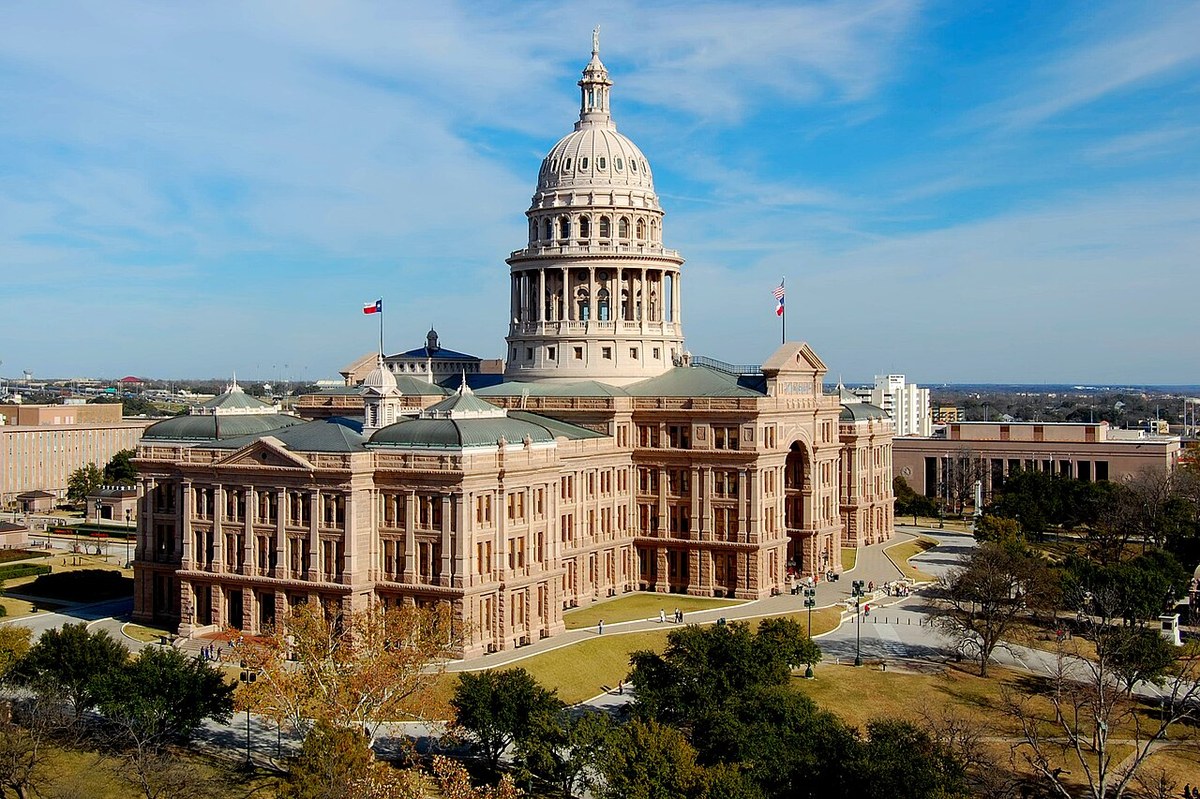
    Texas State Capitol in Austin
    Photo: LoneStarMike. Texas State Capitol, Austin — CC BY 3.0 (via Wikimedia Commons).

    Before the Vulcan: Elevators as proof of concept

    By the time the Vulcan Gas Company opened in October 1967, the 13th Floor Elevators had already taken Austin’s psychedelic experiment national. Formed in 1965, they scored a mid-chart Billboard hit with “You’re Gonna Miss Me,” played the Fillmore and Avalon, and released The Psychedelic Sounds of the 13th Floor Elevators on Houston’s International Artists. Their story — summarized on our Elevators page and in You’re Gonna Miss Me — proved that Texas could export the sound. What Austin still needed was a room built for the culture around it: lights, posters, original bands, and an audience willing to skip Top 40 covers.

    Vulcan Gas Company, 316 Congress Avenue

    According to the Handbook of Texas, Houston White, Gary Maxwell, Don Hyde, and Sandy Lockett opened the Vulcan on October 27, 1967; poster artist Jim Franklin joined that same month and even lived in the building — winters behind the office, summers in a loft near a skylight. The club sat at 316 Congress Avenue — then a low-rent stretch of a grand street — and ran until around July 1970, closing about a month before Armadillo World Headquarters opened. Contemporary accounts also mention a cistern beneath the building that musicians used for echo experiments, and storefront windows dressed with mannequins and light for sidewalk peeping.

    The Vulcan’s brief was simple and radical for Top-40 Texas: original counterculture music. A platform along the east wall held eight slide projectors, three overhead projectors, and other effects gear. Liquid projection and clock crystals filled with colored oil turned the northwest-corner stage into what period descriptions called a “living canvas.” Bands and players associated with the room included the Elevators, Shiva’s Headband, the Conqueroo, Canned Heat, Doug Sahm, Angela Strehli, Johnny Winter, and a young Stevie Ray Vaughan. Don Hyde, who had traded for a cache of White Lightning LSD connected to the Human Be-In era, helped import a San Francisco-style understanding that lights and music hit differently when the audience was altered — an open secret that delighted regulars and alarmed City Hall.

    The same openness that made the Vulcan magnetic also made it a police target. Crowds who would not pay the modest cover (about $1.50) lingered in the doorway; street dealing and rowdy sidewalks invited sweeps across Congress and into the club. Franklin reportedly floated renaming the room the Armadillo Gas Company to cool the heat — a failed rebrand that nonetheless seeded the armadillo mascot of Armadillo World Headquarters, later shaped by Franklin and Eddie Wilson.

    International Artists: Houston money, Texas psych

    International Artists Producing Corporation was a Houston company, not an Austin one — an important geographic detail often blurred in fan lore. Founded in 1965 and active through about 1970, IA issued roughly a dozen albums and around forty singles. Early releases wandered through surf, country, and pop. Then IA single 107 — the Elevators’ “You’re Gonna Miss Me” — became the breakthrough. Lelan Rogers joined to push national promotion; later Ray Rush handled A&R. By 1968 the corporation had brought in investor J. L. Patterson, purchased Houston’s Gold Star Studios facility, and begun a spiral of mergers and plant purchases that ended in bankruptcy.

    IA’s roster still reads like a secret history of Texas rock: the Elevators (four albums), Red Crayola/Red Krayola, Golden Dawn, Lost and Found, Endle St. Cloud, Thursday’s Children, Bubble Puppy (whose “Hot Smoke & Sasafrass” out-charted the Elevators’ hit and earned gold-record status), plus a Lightnin’ Hopkins album that kept the label tied to Houston blues. Business judgment rarely matched musical taste. Artists warned one another about the contracts; Bubble Puppy members later recalled Elevators advice to stay away. The tapes and pressings outlived the corporation.

    What “Austin psychedelic” actually meant

    Unlike the Haight, Austin’s scene was small, surveilled, and braided with blues and folk traditions that never fully left the room. The Elevators mixed garage attack with Hall’s philosophical lyrics; the Vulcan hosted hippie blues beside experimental rock; IA taped both avant-noise and regional R&B. When the Vulcan closed and the Elevators collapsed into legal and medical crisis, the energy did not vanish — it mutated into the Armadillo era, Austin punk, SXSW folklore, and much later the neo-psych of bands who still treat Roky Erickson as a local saint.

    If you are mapping the city today, the Capitol dome in tourist photos is only a backdrop. The real coordinates are a vanished club on Congress, a Houston label’s battered LPs, Jim Franklin’s posters, and a documentary camera that, decades later, finally sat still long enough to watch what Texas did to one of its most gifted singers. Start with the music, then walk the history: Elevators first, Vulcan second, International Artists third — and keep the light-show image in mind whenever someone tells you psychedelia only happened in California.

    Related: Roky Erickson & the 13th Floor Elevators · You’re Gonna Miss Me · Old Links & Press

    Sources

  • 10 Essential Psychedelic Rock Documentaries to Watch

    Psychedelic rock did not arrive as a tidy genre label. It arrived as feedback, liquid light, tape-loop experiments, and a handful of bands that treated the recording booth like an instrument. The best documentaries about that world do more than name-check hits: they show how the music was made, who paid the price, and how later generations kept digging through the wreckage for sounds that still feel unfinished.

    This list is a fan and reference guide for viewers who want primary footage and careful storytelling — not a ranked awards ballot. Concert films sit beside intimate portraits; neo-psychedelic chaos sits beside archival folk festivals. Availability shifts by country and month. Before you buy, rent, or stream, check a legal guide such as JustWatch, the distributor’s site, or your library’s Kanopy/Hoopla catalog. For Roky Erickson and the Elevators specifically, start with our pages on You’re Gonna Miss Me and Roky Erickson & the 13th Floor Elevators.

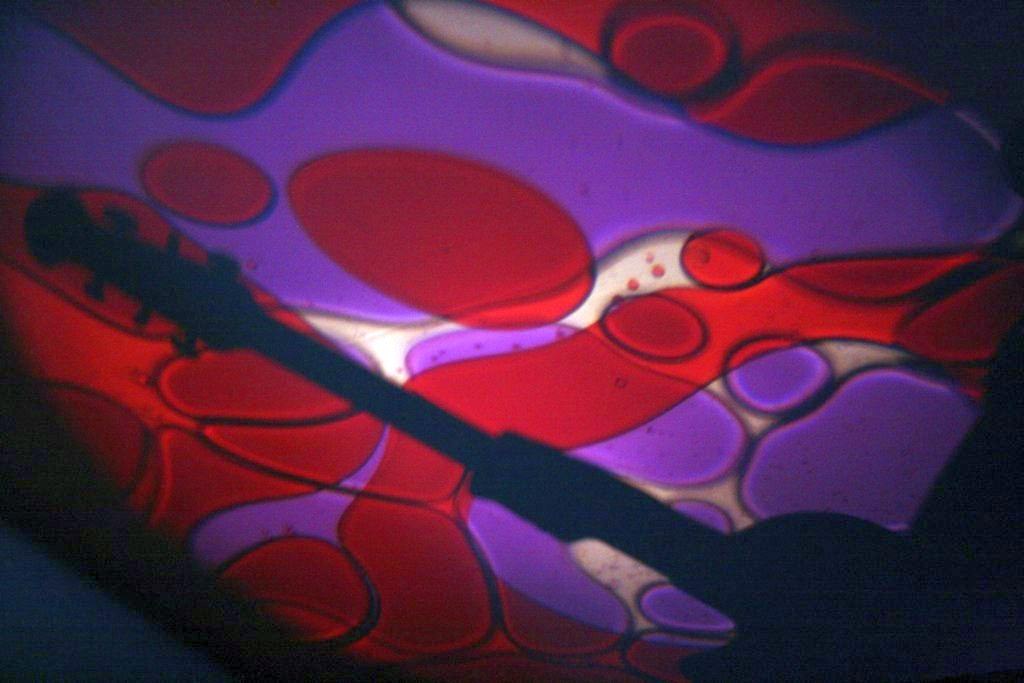
    Liquid light show projecting psychedelic colors
    Photo: _TheNightWatch_. Liquid light show — CC BY 2.0 (via Wikimedia Commons).

    1. Monterey Pop (1968)

    D. A. Pennebaker’s concert film of the June 1967 Monterey International Pop Festival remains one of the clearest windows into the moment psychedelic and hard rock met a mass American audience. The Otis Redding and Jimi Hendrix sequences are justly famous; equally important is the film’s sense of place — California ballroom culture stepping onto a festival stage while cameras still knew how to wait. Watch it as primary evidence, not nostalgia wallpaper.

    2. You’re Gonna Miss Me (2005)

    Keven McAlester’s documentary about Roky Erickson premiered at SXSW in March 2005 and later reached U.S. theaters and DVD through Palm Pictures (limited theatrical from June 2007; DVD that July). It is less a greatest-hits reel than a family and mental-health story: how the Elevators’ frontman became a psychedelic pioneer, how a 1969 marijuana arrest and years inside Texas institutions reshaped his life, and how relatives fought over care and autonomy. Cinematographer Lee Daniel keeps the camera patient; the film earned an Independent Spirit Award nomination for Best Documentary. If you only watch one Texas psych film, make it this one. Full background: You’re Gonna Miss Me.

    3. Pink Floyd: Live at Pompeii (1972)

    Adrian Maben’s film captures Pink Floyd performing in the empty amphitheatre of Pompeii, intercut with studio sequences that show the band treating the control room as a creative instrument. It is not a traditional talking-head documentary, but it remains essential viewing for anyone tracing how British psychedelia matured into progressive, cinematic rock — and how space, silence, and architecture can belong to a concert film.

    4. Echo in the Canyon (2018)

    Andrew Slater’s film, with Jakob Dylan as on-screen guide, revisits Laurel Canyon’s mid-1960s explosion — The Byrds, Buffalo Springfield, The Beach Boys’ studio circle, and the folk-rock-to-psychedelia pipeline that reshaped California pop between roughly 1965 and 1967. Interviews (including Tom Petty in what became one of his final on-camera music-doc appearances) emphasize geography and friendly competition as much as drugs or mythology. Use it to understand the West Coast twin of Austin’s smaller, harder-edged scene.

    5. Long Strange Trip (2017)

    Amir Bar-Lev’s multi-part Grateful Dead documentary is long by design. It covers the Haight-Ashbury years, the Wall of Sound, the tape-trading culture, and the complicated afterlife of a band that turned psychedelic improvisation into a touring institution. Useful even if you are not a Deadhead, because it maps how a local San Francisco experiment became a national network of fans, archivists, and sound engineers.

    6. The Sunshine Makers (2015)

    Cosmo Feilding-Mellen’s film follows Nicholas Sand and Tim Scully, chemists linked to the production of “Orange Sunshine” LSD. It is not a band documentary, but it is indispensable context for psychedelic rock: the chemical supply chain that sat behind so many 1960s scenes, and the legal reckoning that followed. Pair it with Elevators history and you see why Texas law enforcement treated a jug band like a threat.

    7. Festival (1967)

    Murray Lerner’s Newport Folk Festival film (shot across several mid-1960s editions) catches the folk world at the exact moment electric instruments and countercultural politics cracked it open. Dylan going electric is the headline; the surrounding performances show why so many future psychedelic players started in folk clubs with acoustic guitars and borrowed blues progressions.

    8. When You’re Strange (2009)

    Tom DiCillo’s Doors documentary uses archival footage and Johnny Depp’s narration to retell Jim Morrison’s rise and collapse. The Doors were never a classic San Francisco acid band, but their L.A. blend of blues, poetry, and dark psychedelia belongs on any serious watchlist — and the film is careful with period footage rather than reenactment spectacle.

    9. Dig! (2004)

    Ondi Timoner’s vérité chronicle of The Dandy Warhols and The Brian Jonestown Massacre is a neo-psychedelic cautionary tale: friendship, rivalry, addiction, and the early-2000s indie industry. It shows how 1960s psychedelic ideas — drones, jangle, chaos-as-aesthetic — mutated in a later generation, and how documentary cameras can become part of the drama they claim only to observe.

    10. Hung Up on a Dream: The Zombies Documentary (2025)

    Robert Schwartzman’s film follows the British Invasion band whose baroque, melancholic psychedelia (especially Odessey and Oracle) aged into cult immortality. Guardian critic Peter Bradshaw’s June 2025 review called out its warm, clear-eyed look at friendship and delayed recognition — a useful counterweight to burn-out narratives that dominate so many psych-rock stories.

    How to use this list

    Watch the concert films (Monterey Pop, Live at Pompeii) for primary performance evidence. Watch You’re Gonna Miss Me and The Sunshine Makers for the human and chemical costs. Watch Echo in the Canyon and Long Strange Trip for scene geography. Then read deeper histories — Paul Drummond’s Eye Mind on the Elevators is a standard book-length reference — and circle back to the music itself. Psychedelic rock documentaries are at their best when they refuse to sand the edges off the era.

    Related on RokyMovie: You’re Gonna Miss Me · Roky Erickson & the 13th Floor Elevators · Old Links & Press

    Sources