Tag: International Artists

  • How to Start Collecting 1960s Psychedelic Vinyl

    How to Start Collecting 1960s Psychedelic Vinyl

    Collecting 1960s psychedelic records is easier to start, and easier to botch, than it looks. Original International Artists LPs, regional garage 45s, and first-press San Francisco albums can be scarce, pricey, and surrounded by unofficial represses. The good news is that you do not have to begin with a grail. You can learn the music on honest, well-mastered reissues, learn how pressings are identified, and only then decide whether an original copy is worth the hunt.

    This is a practical guide, not a price list. Asking prices move with condition, fashion, and whoever happens to be bidding this week, so we will not invent numbers that will be wrong by the time you read them. If your interest starts with the 13th Floor Elevators, keep our pages on Roky Erickson and the band and You’re Gonna Miss Me nearby — then let the records, not the mythology, set the pace.
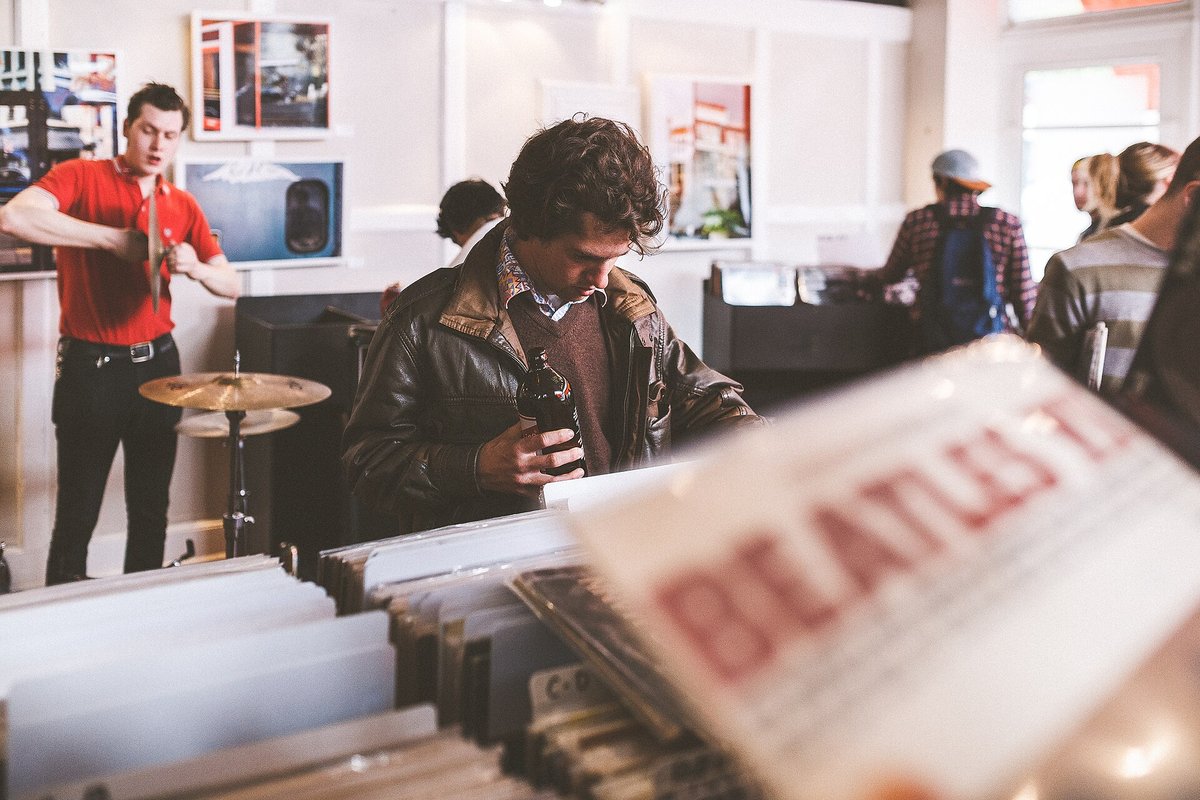
    Vinyl records in the bins of a record store
    Photo: Samuel Dixon. Record store bins at Steady Sounds, Richmond — CC0 (via Unsplash and Wikimedia Commons).

    1. Listen first, collect second

    The most useful first purchase is often not a 1966 original. It is a legal, well-annotated compilation that teaches you the landscape. Lenny Kaye’s Nuggets: Original Artyfacts from the First Psychedelic Era, 1965–1968, first issued by Elektra in 1972 and later expanded by Rhino, remains the classic map of American garage and psychedelia — and it includes the Elevators’ “You’re Gonna Miss Me.” Our history of the Nuggets compilation explains how that set was built. Once you know which bands you actually want to live with, you can spend money on albums instead of on a rumor.

    Reissue labels worth knowing by name include Rhino, Sundazed, Ace, Light in the Attic, and the various official or licensed International Artists and Charly/Decal programs that have kept Texas titles in print. A good reissue will say where the audio came from (original tapes, a clean vinyl transfer, a previous CD master) and will not pretend to be a 1960s pressing. That honesty is a feature, not a disappointment.

    2. Learn how to tell an original from a later copy

    Before you pay “original” money, match the object in your hands to a documented pressing. The usual clues are the label design, catalog number, cover construction, and the runout etchings in the vinyl near the label. Databases such as Discogs and specialist discographies exist for this; use more than one listing, and prefer entries with photographs of the actual labels and trail-off grooves.

    International Artists, the Houston label behind the Elevators, is a useful case study because collectors have documented its label changes in detail. The Both Sides Now discography describes first-press IA albums as green labels with yellow print (mono) or silver print (stereo); later original-era copies moved to yellow-and-blue and then all-yellow labels. When the company briefly revived the catalog in 1978–79, reissues appeared with aqua-blue labels and “Masterfonics” in the runout grooves. In the 1980s, Charly in the U.K. (including its Decal imprint) reissued much of the catalog again. Those later editions can sound fine and can be the right copy to play; they are not 1960s originals, and they should not be priced as if they were. For the label’s history, see our article on Austin’s scene and International Artists.

    A related mid-1960s question is mono versus stereo. Many garage and psychedelic singles were mixed for AM radio in mono. Some albums exist in both formats, with the mono often valued by collectors because it represents the original single-minded punch of the era. Neither format is automatically “better” for every title; compare, read the discography, and decide whether you are buying to listen or to complete a shelf.

    3. Grade the record, not the story

    Condition is not a vibe. It is a language. The standard most English-language sellers still use is the Goldmine system, which Goldmine itself explains and which Discogs has adapted. In brief: Mint (M) is effectively untouched and should be used with extreme caution; Near Mint (NM) is nearly perfect, with no meaningful wear and clean playback; Very Good Plus (VG+) may show light scuffs or slight sleeve wear but should still play well; Very Good (VG) implies visible wear and some audible surface noise; Good and below are reading or filler copies unless the record is extraordinarily rare. Grade the disc and the sleeve separately. Look for seam splits, ring wear, writing, promo stickers, warps, and scratches under a hard light — not just in a dim shop corner.

    If a listing says “NM original” and the photos show seam splits, spindle marks, or a label design that belongs to a later reissue, believe the photos. Ask for pictures of both labels and of the runouts. A reputable seller would rather answer that question than process a return.

    4. Where to buy — and what to avoid

    Start local if you can: independent record shops, record fairs, and estate-sale piles still turn up 1960s LPs and, just as important, 45s. Garage and psychedelic history lives on singles; many bands never made an album. Online, Discogs is both a discography and a marketplace, and major retailers and label webshops are the straightforward path for current reissues. Used marketplace listings are fine when the seller has a return policy, clear photos, and a grading style you can parse.

    Be skeptical of “mint original” copies offered far outside the range of recent sales, of records with no photos of the labels, and of brand-new-looking copies of famously scarce titles. Unofficial represses and outright counterfeits exist in this part of the hobby, especially around valuable psychedelic LPs. A bargain that is only a bargain if the record is genuine is not a bargain until you have identified the pressing. Buying a documented reissue from a known label is always a legitimate way to hear the music; it is also how you keep your first year of collecting from becoming an expensive tutorial in disappointment.

    5. Care, storage, and playback

    Store LPs vertically, packed comfortably but not so tight that jackets crush, and keep them away from heat, direct sun, and damp. Use anti-static, preferably poly-lined inner sleeves, and replace crumbling paper inners that shed grit into the grooves. A carbon-fiber brush is enough for routine dust before a play. For dirtier used copies, use a dedicated record-cleaning solution or a simple distilled-water routine designed for vinyl — not dish soap, window cleaner, or anything abrasive. A clean stylus and a reasonably aligned, not-worn cartridge will do more for the sound of a 1960s pressing than any debate about cables.

    6. A starter path for this catalog

    1. Buy a legal, well-mastered Nuggets edition and live with it for a few weeks.
    2. Add reputable reissues of the albums you replay — for Elevators listeners, The Psychedelic Sounds of the 13th Floor Elevators and Easter Everywhere are the usual starting pair, discussed in our electric jug history.
    3. Branch into adjacent Texas and garage titles (Bubble Puppy, other International Artists albums, Seeds, Electric Prunes, Standells) on reissue first.
    4. Only then hunt originals, 45s, or mono copies, with a discography open and a condition standard you will actually keep.

    Collecting this music is a way of funding the people who keep tapes, rights, and small labels alive — and of staying close to records that were never supposed to last fifty years. You do not have to own a first-press green-label IA album to be in the conversation. You do have to know what you are holding. For more of the history behind the Texas titles, start with Austin’s 1960s psychedelic scene and the old links and press that helped keep this catalog visible.

    Related: The Story of Nuggets · The 13th Floor Elevators and the Electric Jug · You’re Gonna Miss Me · Old Links & Press

    Sources

  • Austin’s 1960s Psychedelic Scene: Vulcan Gas Company and International Artists

    San Francisco gets the mythology. London gets the fashion spreads. Austin, in the late 1960s, got something quieter and stranger: a teenage screamer from Travis High, a UT philosophy student with an electric jug, a Houston label that barely knew how to run a business, and a Congress Avenue club whose light booth held eight slide projectors and three overheads. Together they made Central Texas a genuine node of psychedelic rock — not a satellite of California, but a scene with its own temperature, police pressure, and unfinished business.

    Texas State Capitol in Austin
    Photo: LoneStarMike. Texas State Capitol, Austin — CC BY 3.0 (via Wikimedia Commons).

    Before the Vulcan: Elevators as proof of concept

    By the time the Vulcan Gas Company opened in October 1967, the 13th Floor Elevators had already taken Austin’s psychedelic experiment national. Formed in 1965, they scored a mid-chart Billboard hit with “You’re Gonna Miss Me,” played the Fillmore and Avalon, and released The Psychedelic Sounds of the 13th Floor Elevators on Houston’s International Artists. Their story — summarized on our Elevators page and in You’re Gonna Miss Me — proved that Texas could export the sound. What Austin still needed was a room built for the culture around it: lights, posters, original bands, and an audience willing to skip Top 40 covers.

    Vulcan Gas Company, 316 Congress Avenue

    According to the Handbook of Texas, Houston White, Gary Maxwell, Don Hyde, and Sandy Lockett opened the Vulcan on October 27, 1967; poster artist Jim Franklin joined that same month and even lived in the building — winters behind the office, summers in a loft near a skylight. The club sat at 316 Congress Avenue — then a low-rent stretch of a grand street — and ran until around July 1970, closing about a month before Armadillo World Headquarters opened. Contemporary accounts also mention a cistern beneath the building that musicians used for echo experiments, and storefront windows dressed with mannequins and light for sidewalk peeping.

    The Vulcan’s brief was simple and radical for Top-40 Texas: original counterculture music. A platform along the east wall held eight slide projectors, three overhead projectors, and other effects gear. Liquid projection and clock crystals filled with colored oil turned the northwest-corner stage into what period descriptions called a “living canvas.” Bands and players associated with the room included the Elevators, Shiva’s Headband, the Conqueroo, Canned Heat, Doug Sahm, Angela Strehli, Johnny Winter, and a young Stevie Ray Vaughan. Don Hyde, who had traded for a cache of White Lightning LSD connected to the Human Be-In era, helped import a San Francisco-style understanding that lights and music hit differently when the audience was altered — an open secret that delighted regulars and alarmed City Hall.

    The same openness that made the Vulcan magnetic also made it a police target. Crowds who would not pay the modest cover (about $1.50) lingered in the doorway; street dealing and rowdy sidewalks invited sweeps across Congress and into the club. Franklin reportedly floated renaming the room the Armadillo Gas Company to cool the heat — a failed rebrand that nonetheless seeded the armadillo mascot of Armadillo World Headquarters, later shaped by Franklin and Eddie Wilson.

    International Artists: Houston money, Texas psych

    International Artists Producing Corporation was a Houston company, not an Austin one — an important geographic detail often blurred in fan lore. Founded in 1965 and active through about 1970, IA issued roughly a dozen albums and around forty singles. Early releases wandered through surf, country, and pop. Then IA single 107 — the Elevators’ “You’re Gonna Miss Me” — became the breakthrough. Lelan Rogers joined to push national promotion; later Ray Rush handled A&R. By 1968 the corporation had brought in investor J. L. Patterson, purchased Houston’s Gold Star Studios facility, and begun a spiral of mergers and plant purchases that ended in bankruptcy.

    IA’s roster still reads like a secret history of Texas rock: the Elevators (four albums), Red Crayola/Red Krayola, Golden Dawn, Lost and Found, Endle St. Cloud, Thursday’s Children, Bubble Puppy (whose “Hot Smoke & Sasafrass” out-charted the Elevators’ hit and earned gold-record status), plus a Lightnin’ Hopkins album that kept the label tied to Houston blues. Business judgment rarely matched musical taste. Artists warned one another about the contracts; Bubble Puppy members later recalled Elevators advice to stay away. The tapes and pressings outlived the corporation.

    What “Austin psychedelic” actually meant

    Unlike the Haight, Austin’s scene was small, surveilled, and braided with blues and folk traditions that never fully left the room. The Elevators mixed garage attack with Hall’s philosophical lyrics; the Vulcan hosted hippie blues beside experimental rock; IA taped both avant-noise and regional R&B. When the Vulcan closed and the Elevators collapsed into legal and medical crisis, the energy did not vanish — it mutated into the Armadillo era, Austin punk, SXSW folklore, and much later the neo-psych of bands who still treat Roky Erickson as a local saint.

    If you are mapping the city today, the Capitol dome in tourist photos is only a backdrop. The real coordinates are a vanished club on Congress, a Houston label’s battered LPs, Jim Franklin’s posters, and a documentary camera that, decades later, finally sat still long enough to watch what Texas did to one of its most gifted singers. Start with the music, then walk the history: Elevators first, Vulcan second, International Artists third — and keep the light-show image in mind whenever someone tells you psychedelia only happened in California.

    Related: Roky Erickson & the 13th Floor Elevators · You’re Gonna Miss Me · Old Links & Press

    Sources

  • The 13th Floor Elevators and the Electric Jug

    Before “psychedelic rock” was a bin card in record stores, it was a word Tommy Hall borrowed from Timothy Leary’s writings and applied to a brand-new Austin band. The 13th Floor Elevators formed in 1965 around Hall’s lyrics and electric jug, Stacy Sutherland’s lead guitar, a rhythm section drawn from the coastal Texas group the Lingsmen, and Roger Kynard “Roky” Erickson — still a teenager — who left the Spades to sing and play rhythm guitar. Within a year they had a national single, a provocatively titled debut album, and the attention of both San Francisco ballroom bookers and Texas law enforcement.

    What made them unmistakable was not only Erickson’s shredded, gospel-fierce voice. It was the jug: a clay whiskey vessel that Hall treated as an amplifier for the human voice rather than as a folk bass substitute. For a deeper portrait of Erickson after the Elevators, see Roky Erickson & the 13th Floor Elevators and the documentary guide You’re Gonna Miss Me.

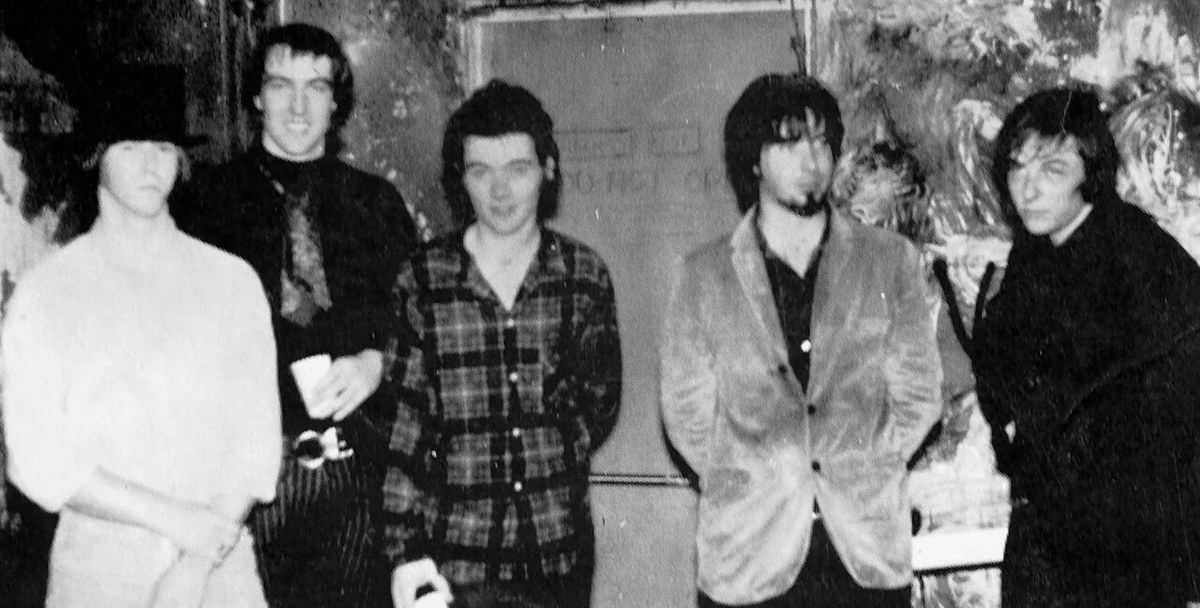
    The 13th Floor Elevators in the 1960s
    The 13th Floor Elevators, 1960s. Published in Not Fade Away (Fall 1975). Public domain (via Wikimedia Commons).

    Naming a sound — and a band

    Hall was a University of Texas student working through philosophy, psychology, and chemical engineering when he began assembling the group. Clementine Hall reportedly suggested the name 13th Floor Elevators: American high-rises often skip a labeled thirteenth floor, so the phrase implied travel to another level of consciousness. Others have linked the “thirteenth” to the letter M and marijuana. In November 1965 Hall began describing the band’s sound as psychedelic — garage rock braided with folk, R&B, and lyrics shaped by hallucinogenic experience — and Erickson’s screaming lead vocals finished the argument.

    Why the jug sounded like nothing else

    Traditional jug-band players blow across the opening to produce a low, tuba-like thump. Hall did something else. He vocalized melodic runs into the mouth of the jug, using the clay chamber for resonance, echo, and distortion. Live, he held a microphone to the jug’s opening; when recording Easter Everywhere, engineers reportedly placed a microphone inside the jug to exaggerate the effect. The result sat somewhere between a cuíca, an early synthesizer, and a human voice trapped in pottery — a signature that no cover band could fake with a guitar pedal alone.

    Hall was frank, in later interviews, about why he invented it. He did not consider himself a conventional musician. He wanted a place onstage so he could deliver lyrics shaped by study and LSD experience. The jug was a tool of presence as much as of timbre: a way for the band’s resident theorist to stand inside the music instead of only writing it.

    From Contact Records to International Artists

    Erickson’s earlier band, the Spades, had already cut “You’re Gonna Miss Me” for Austin’s Zero Records. The Elevators re-recorded it harder, closer to the Kinks and Stones energy they admired, and issued it with “Tried to Hide” on the small Contact label. Regional television followed — including Dallas’s Sump’n Else and Houston’s Larry Kane Show. Houston’s International Artists soon signed the group, hired Lelan Rogers (brother of Kenny Rogers) for promotion and production, and re-released the single nationally in mid-1966. It became the band’s biggest commercial moment, reaching the mid-50s on the Billboard charts (Handbook of Texas cites number 56).

    The debut LP, The Psychedelic Sounds of the 13th Floor Elevators (November 1966), announced the aesthetic in its title. The follow-up, Easter Everywhere (1967), is often cited by fans and historians as a high-water mark of American psychedelia — denser, more exploratory, still anchored by Erickson’s voice and Hall’s jug. A 1968 “live” album padded with studio outtakes and dubbed applause disappointed commercially. Bull of the Woods (January 1969) leaned on Sutherland’s writing and was finished without Erickson’s full participation as the singer’s legal and medical crises consumed the band.

    West Coast heat, Texas heat

    Success pulled the Elevators to San Francisco ballrooms — the Fillmore Auditorium, the Avalon Ballroom — and onto national television (American Bandstand, Where the Action Is). They shared bills with acts such as the Grateful Dead, Moby Grape, and Big Brother and the Holding Company. Bassist Benny Thurman stayed in Texas; Ronnie Leatherman stepped in. Back home, open drug advocacy and marijuana arrests brought Texas Rangers and radio bans. In one 1966 case, charges against Walton and Erickson were dropped on a technicality while Sutherland and Hall received suspended sentences. Public pressure later eased some radio blacklists, but the pattern was set: the band’s philosophy made them a law-enforcement target in a state that did not romanticize the counterculture.

    Lineup churn followed. In summer 1967 Walton and Leatherman left; Danny Thomas (drums/piano) and Dan Galindo (bass) arrived. Touring contracted toward Texas as legal and personal problems mounted. Erickson’s 1969 marijuana arrest — not his first — led him to choose commitment at Rusk State Hospital for the Criminally Insane over a long prison term. The Elevators effectively ended there. Hall eventually returned to San Francisco; most other members stayed in Texas. Sutherland was fatally shot by his wife in 1978. Surviving members reconvened in fragments over the decades, including a May 10, 2015 Levitation (Austin Psych Fest) anniversary set with Erickson, Hall, Walton, and Leatherman.

    What the Elevators left behind

    Influence lists are easy to inflate, but the Elevators’ documented admirers and legatees are real: Texas punk and neo-psych scenes, artists who covered Erickson on the 1990 Sire tribute Where the Pyramid Meets the Eye, and later musicians from Robert Plant to the White Stripes who publicly acknowledged the debt. International Artists’ 2009 box set Sign of the 3 Eyed Men and Paul Drummond’s biography Eye Mind gave historians a denser archive. The electric jug remains the easiest shorthand for their difference — a reminder that psychedelia was not only fuzz pedals and sitars. Sometimes it was a philosophy student singing into a jug so the words would leave the room changed.

    Related: Roky Erickson & the 13th Floor Elevators · You’re Gonna Miss Me

    Sources