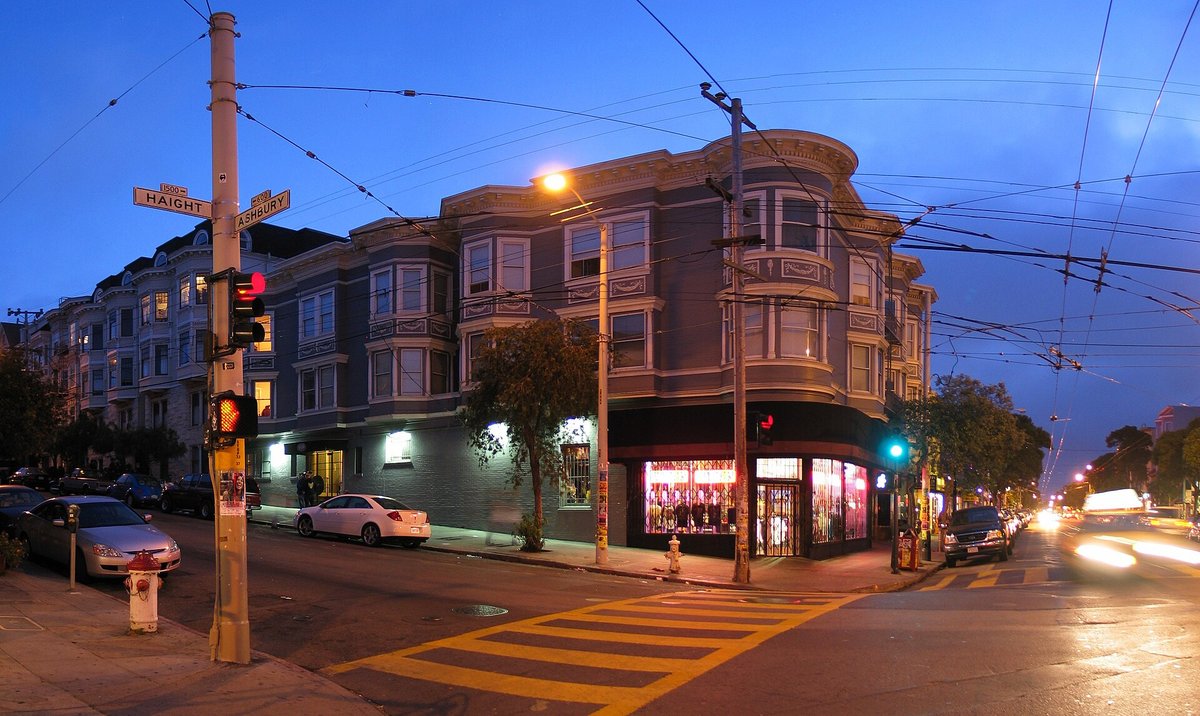
Ask a casual listener where American psychedelic rock happened, and the answer is usually San Francisco: Haight-Ashbury, the Fillmore, the Avalon, liquid light, and a summer that magazines would not stop covering. That picture is not wrong. It is incomplete. In 1965, while the Bay Area’s ballroom culture was still taking shape, an Austin band led by a University of Texas philosophy student and a teenage singer from the Spades was already calling its sound psychedelic. The 13th Floor Elevators would soon travel west and play the same rooms that made the San Francisco scene famous. The traffic, in other words, went both ways — but the two cities were never the same kind of experiment.
This is a comparison, not a contest. San Francisco had the infrastructure and the spotlight. Austin had a harder legal climate, a smaller circuit, and a Houston label that could get a single onto the national charts without ever resembling Warner Bros. or RCA. Understanding both is the best way to hear why the Elevators sounded like themselves, and why Keven McAlester’s You’re Gonna Miss Me is a Texas story rather than a Haight-Ashbury footnote.
Who got there first — and who got the cameras
Chronology is less tidy than city pride likes to admit. San Francisco’s mid-1960s scene had deep folk, blues, and bohemian roots; by 1966 Bill Graham was presenting shows at the Fillmore Auditorium, and Chet Helms’s Family Dog was filling the Avalon Ballroom with dancing crowds, light shows, and a poster culture that became an art movement of its own. Jefferson Airplane had signed to RCA Victor in late 1965; the Grateful Dead were on Warner Bros. in time for a 1967 debut album. On January 14, 1967, the Human Be-In drew a crowd in the tens of thousands — contemporary and later estimates often range from 20,000 to 30,000 — to the Polo Fields in Golden Gate Park, a preview of the media storm that would be called the Summer of Love.
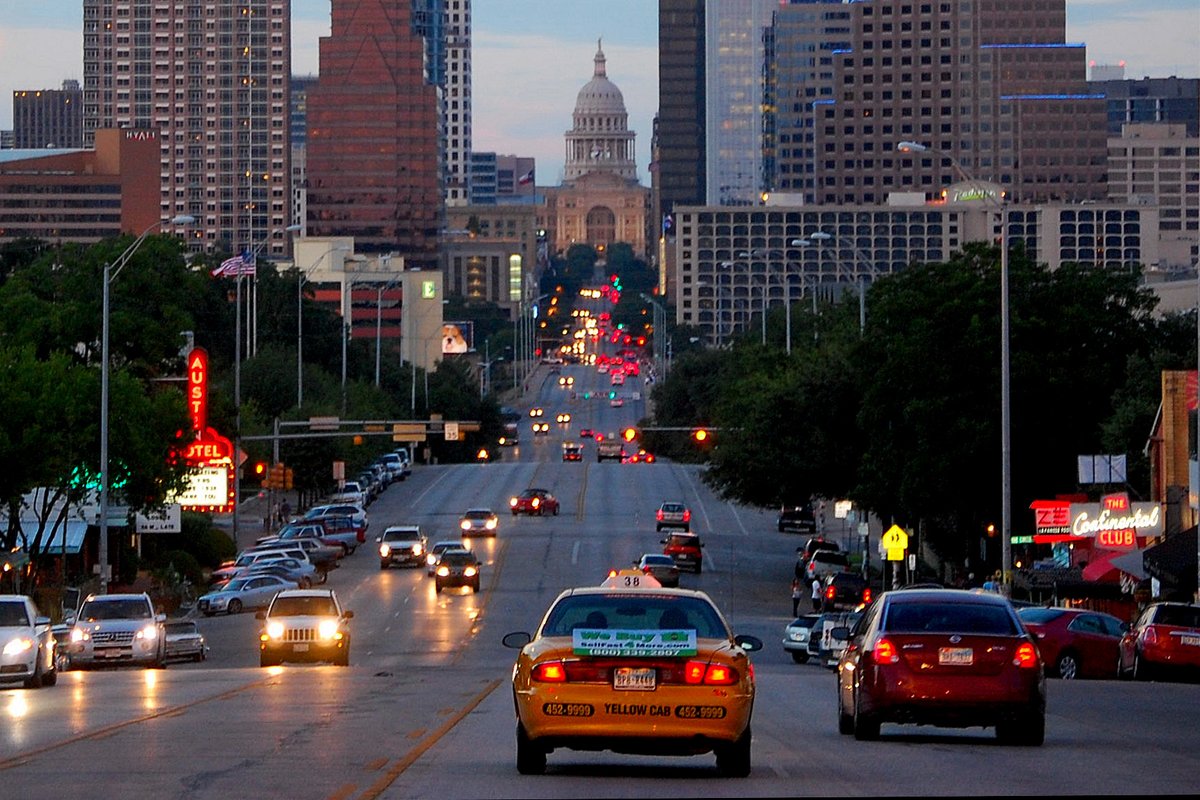
Austin’s clock started just as early and ran on a different voltage. The Elevators formed in 1965. In November of that year, according to the Handbook of Texas, Tommy Hall began describing the band’s sound as psychedelic after encountering the word in Timothy Leary’s writings. “You’re Gonna Miss Me” became a national single on International Artists in mid-1966 and reached the mid-50s on the Billboard charts — proof that Texas could export the music before it had a ballroom built specifically for the culture around it. The Vulcan Gas Company, Austin’s essential psychedelic room, did not open at 316 Congress Avenue until October 27, 1967, after San Francisco’s summer in the headlines. For the club and the Houston label behind the Elevators, see our longer piece on Austin’s 1960s psychedelic scene.
Rooms, labels, and the sound of a scene
San Francisco had a pair of flagship halls with national reputations, a dense cluster of bands (the Dead, the Airplane, Big Brother and the Holding Company, Quicksilver Messenger Service, Country Joe and the Fish), and major-label contracts that could put a San Francisco album in every city with a record shop. The musical stereotype is not entirely a cartoon: folk roots, modal jamming, raga inflections, and long improvisations suited rooms where the light show and the dancing were part of the event. There were tighter, song-based Bay Area groups too, but the national image favored the jam.
Austin’s scene was smaller, more closely watched, and braided with Texas garage, folk, and blues traditions that never fully left the room. The Elevators attacked like a garage band and thought like a philosophy seminar; Hall’s electric jug made them instantly recognizable and impossible to mistake for a Fillmore dance band. International Artists, based in Houston rather than Austin, issued a modest run of albums and singles — the Elevators, the Red Crayola/Red Krayola, Golden Dawn, Bubble Puppy, a Lightnin’ Hopkins LP — without the corporate depth of RCA or Warner. The music traveled. The business often did not. That difference in scale is easy to hear even now: one scene documented by a small army of photographers, poster artists, and label publicists; the other reconstructed later from battered IA pressings, club memories, and a documentary camera that arrived decades after the fact.
The crossing: Elevators west, Joplin west, and a few shared bills
The two worlds did meet. As the Elevators’ single rose, the band toured the West Coast. Benny Thurman stayed in Texas; Ronnie Leatherman took over on bass. The Handbook of Texas records that they were especially well received in the Bay Area, playing the Avalon and the Fillmore as well as smaller rooms, and appearing with acts such as the Grateful Dead, Moby Grape, and Big Brother and the Holding Company. A Family Dog poster now in the Fine Arts Museums of San Francisco collection advertises the Elevators with Moby Grape at the Avalon on November 11 and 12, 1966 — physical evidence of a Texas band on a San Francisco wall. They also reached national television (American Bandstand, Where the Action Is).
Janis Joplin moved in the other direction. Raised in Port Arthur, Texas, and active in the Austin folk scene, she settled in San Francisco and became the voice of Big Brother. Amy Berg’s later documentary Janis: Little Girl Blue traces that path in detail. The Handbook of Texas notes, carefully, that the Elevators had reportedly asked Joplin to join them, and that she declined while acknowledging the band’s influence. Whether or not every retelling of that offer is complete, the larger fact is solid: talented Texans were looking at the same horizon, and only some of them could make a living inside Texas.
Police, press, and what happened after the peak
San Francisco was never unpoliced, and the media rush of 1967 brought its own damage — overcrowding, exploitation, and a short shelf life for the neighborhood’s myth. The Avalon lost its lease in 1968. The decade’s Bay Area aftertaste includes Altamont in December 1969, a widely cited symbol of the era’s souring, even if no single concert can end a culture by itself. Still, for a few years the city offered something Austin could not: a concentration of venues, audiences, and press that made psychedelic rock look like the center of American youth culture.
Austin offered the opposite pressure. The Elevators’ open drug advocacy drew Texas Rangers and radio bans; a 1966 marijuana case saw some charges dropped on a technicality while other members received suspended sentences. In 1969 Erickson, facing a substantial prison term after another marijuana arrest, chose commitment at Rusk State Hospital for the Criminally Insane. The band effectively ended there. The Vulcan, which had imported a San Francisco-style understanding of lights, posters, and an altered audience, was itself a police target and closed around July 1970. The energy mutated into the Armadillo World Headquarters era, later Austin punk, and, much later, a neo-psych circuit that still treats Erickson as a local saint. Our Elevators reference page and the documentary You’re Gonna Miss Me pick up that human cost in closer detail.
What to hold onto from the comparison
If you want the mass-cultural image of psychedelia — the neighborhood, the festival, the major-label album, the poster in the museum — you start in San Francisco. If you want to understand how early, and how unforgiving, the same impulse could be in America, you start in Austin. The Elevators did not need California’s permission to use the word “psychedelic,” but they did need California’s stages to show that a Texas band belonged in the same conversation as the Dead or Moby Grape. Joplin’s career shows the reverse gravitational pull: a Texas voice that became, for the rest of the world, a San Francisco story.
Neither city owns the era. The useful habit is to keep both maps open: Haight and Ashbury in one window, Congress Avenue in the other, and the records in between. For the visual language of the ballrooms, see our companion piece on 1960s psychedelic concert poster art.
Related: Austin’s 1960s Psychedelic Scene · Roky Erickson & the 13th Floor Elevators · You’re Gonna Miss Me · Old Links & Press