Tag: music documentaries

  • Music Documentaries About Troubled Artists: From Syd Barrett to Daniel Johnston

    Music Documentaries About Troubled Artists: From Syd Barrett to Daniel Johnston

    Some of the most valuable music documentaries are not concert films. They are portraits of artists whose public work and private suffering got tangled together, and of the families, bandmates, and medical systems that tried — or failed — to help. That is a difficult brief. Done well, these films widen a listener’s sympathy and keep the songs at the center. Done badly, they turn illness into spectacle.

    This guide is a starting map, not a medical textbook and not a ranked list of “most tragic” lives. It focuses on films that are especially useful to readers of a site about psychedelic rock and its afterlives. Two of them premiered in the same winter and spring of 2005: Keven McAlester’s You’re Gonna Miss Me, about Roky Erickson of the 13th Floor Elevators, and Jeff Feuerzeig’s The Devil and Daniel Johnston, about the Austin songwriter and artist Daniel Johnston. Both men died in 2019. Watching the films side by side is one of the clearest ways to understand what a careful music documentary can, and cannot, explain.
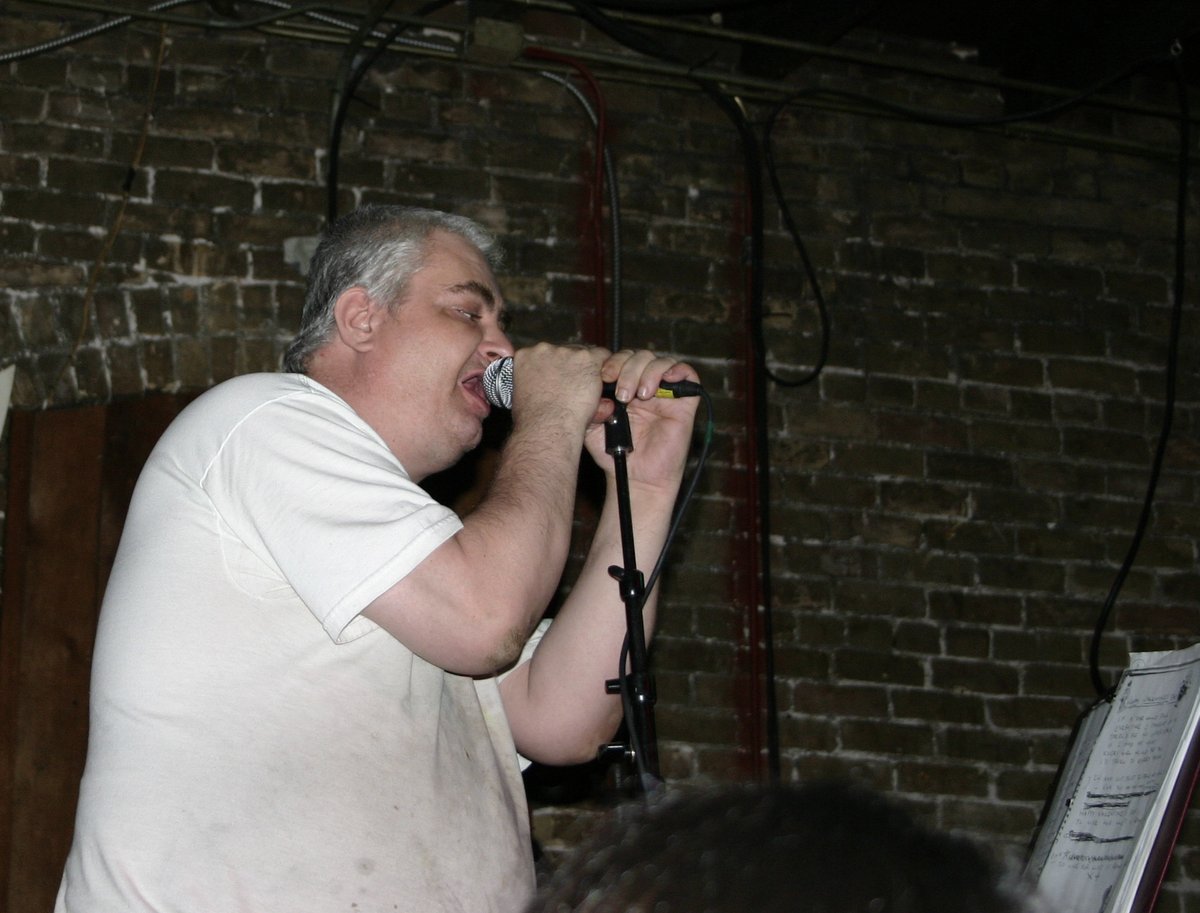
    Daniel Johnston performing at Emo's in Austin
    Photo: Joshua Head. Daniel Johnston performing at Emo’s, Austin — CC BY-SA 2.0 (via Wikimedia Commons).

    How to watch these films without turning them into gossip

    A few habits help. Treat a filmmaker’s interview subjects as witnesses, not as a final diagnosis. Notice who holds the archive — home tapes, medical records, family footage — and who does not get to speak. Be wary of any narration that claims a single cause (usually “the drugs” or “the genius”) for a complicated life. And when you finish a film, go back to the records. The point is not to linger on collapse; it is to hear the work more clearly. For legal ways to find these titles as rights move between platforms, use our streaming and buying guide.

    You’re Gonna Miss Me (2005)

    McAlester’s film, which premiered at SXSW in March 2005 and later reached U.S. theaters and DVD through Palm Pictures, is the anchor of this site for a reason. It is less a psychedelic-rock primer than a family and mental-health story: how Erickson helped pioneer an American psychedelic sound, how a 1969 marijuana arrest and years inside Texas institutions reshaped his life, and how relatives later fought over care and autonomy. The camera is patient. The film earned an Independent Spirit Award nomination for Best Documentary. If you are new to Erickson, start here, then read our pages on the documentary and the Elevators years.

    The Devil and Daniel Johnston (2005)

    Feuerzeig’s documentary premiered at the Sundance Film Festival in January 2005, where he won the Documentary Directing Award. Sony Pictures Classics released it theatrically in the United States (New York opening March 31, 2006). Running about 110 minutes, the film follows Johnston from childhood through midlife, using a remarkable trove of the artist’s own audio journals, Super 8, and drawings. It does not hide the consequences of bipolar disorder in his life — including hospitalizations and a frightening episode involving his father’s small plane — but it also takes seriously the songs and the homemade cassettes that made him a cult figure in Austin.

    The Austin connection is not incidental. Johnston worked at a McDonald’s in the city and handed out tapes; his “Hi, How Are You” frog drawing later became a local landmark and, in 1992, a T-shirt worn by Kurt Cobain at the MTV Video Music Awards. Feuerzeig has said in interviews that mid-2000s concert appearances convinced him Johnston was entering a “third act” worth filming, even after earlier, heavily medicated interviews proved hard to use. The finished film is built as much from Johnston’s self-documentation as from talking heads. He died on September 11, 2019, at fifty-eight.

    Syd Barrett: two films, two decades apart

    Roger Keith “Syd” Barrett co-founded Pink Floyd, named the group, and wrote its first two hit singles, “Arnold Layne” and “See Emily Play.” He led the band through the 1967 debut The Piper at the Gates of Dawn, then left — or was replaced — as his behavior became impossible for the group to manage. He recorded two solo albums in 1970, The Madcap Laughs and Barrett, and spent the rest of his life mostly out of public view in Cambridge. He died in 2006, at sixty. The films about him are strongest when they admit how much remains unknown: the mix of LSD use, possible undiagnosed illness, and a retreat from fame has never yielded a single tidy explanation, and it should not be forced into one.

    John Edginton’s documentary began as the BBC Omnibus film Syd Barrett: Crazy Diamond (2001) and was issued on DVD in 2003 as The Pink Floyd and Syd Barrett Story. It includes interviews with Roger Waters, David Gilmour, Nick Mason, and Richard Wright — a complete surviving-Floyd conversation that later films cannot repeat, because Wright died in 2008.

    The later feature Have You Got It Yet? The Story of Syd Barrett and Pink Floyd (2023), directed by Roddy Bogawa with the late Hipgnosis designer Storm Thorgerson (who worked on the project until his death in 2013), returns to the same questions with a new round of interviews — including Gilmour, Mason, Waters, Barrett’s sister Rosemary Breen, early managers, and a wider circle of musicians and friends. Actor Jason Isaacs narrates. The film reached U.K. theaters in May 2023 and U.S. theaters later that summer. Watch it as a companion to Edginton, not a replacement: one is a compact television history with Wright on camera; the other is a longer mosaic assembled across many years.

    Brian Wilson, Nick Drake, and Janis Joplin

    Brian Wilson’s mid-1960s work on the Beach Boys’ unfinished Smile sits at the edge of psychedelia proper, but the collapse of that project — and Wilson’s later, highly public struggles — belongs on this list. David Leaf’s Beautiful Dreamer: Brian Wilson and the Story of Smile (2004) is the essential film about the original sessions, the legend that grew around them, and Wilson’s 2004 completion of the work as Brian Wilson Presents Smile. Brent Wilson’s later documentary Brian Wilson: Long Promised Road (2021), which premiered at the Tribeca Festival, is a different shape: a road-bound conversation with Rolling Stone editor Jason Fine, returning to places in Wilson’s life rather than reconstructing a single album. Wilson died in 2025; the 2021 film now also reads as a late portrait.

    Jeroen Berkvens’s A Skin Too Few: The Days of Nick Drake (2000) is short — about 48 minutes — and unusually quiet. It approaches the English singer-songwriter, who died in 1974 at twenty-six after three closely held albums, through interviews with family, friends, and collaborators, and through landscape rather than tabloid reconstruction. Availability has been intermittent; check a legal guide before assuming it is on a given service.

    Amy J. Berg’s Janis: Little Girl Blue (2015) is the most useful recent documentary on Janis Joplin, the Port Arthur, Texas, singer who passed through the Austin folk scene and became a defining voice of San Francisco’s Big Brother and the Holding Company. It premiered at the Venice Film Festival on September 6, 2015, and opened theatrically in the United States that November. Berg builds the film around previously unseen performance footage, interviews, and Joplin’s letters, which Chan Marshall (Cat Power) reads on the soundtrack. For RokyMovie readers, it is also a companion to the Texas-to-California story: the Elevators went west to play the Fillmore and the Avalon; Joplin went west and stayed. The Handbook of Texas notes, with appropriate caution, that the Elevators had reportedly asked Joplin to join them and that she declined.

    A watching order, if you want one

    If you are coming from this site, start with You’re Gonna Miss Me, then The Devil and Daniel Johnston. They share a city, a year of release, and a refusal to separate the songs from the care those singers needed. Follow with one Barrett film (Edginton first, if you can find it, because of Wright), then Beautiful Dreamer or Little Girl Blue depending on whether you want studio obsession or a Texas voice in California. Keep A Skin Too Few for a night when you want a shorter, quieter film.

    These documentaries do not compete with the music, and they do not replace serious biography. They are, at their best, acts of attention — a way of sitting still with people who were not always treated carefully while they were alive. For a wider psychedelic viewing list that includes concert films and scene histories, see our guide to essential psychedelic rock documentaries.

    Related: You’re Gonna Miss Me · Roky Erickson & the 13th Floor Elevators · 10 Essential Psychedelic Rock Documentaries · How to Legally Stream or Buy Classic Rock Documentaries · Old Links & Press

    Sources

  • How to Legally Stream or Buy Classic Rock Documentaries

    Music documentaries disappear and reappear from streaming menus with little warning. A film that was on one subscription service last month may be rental-only today and a boutique Blu-ray next year. This guide explains where to look and how to verify a legal copy — without inventing prices, claiming a title is “always” on a given platform, or pointing anyone toward unauthorized uploads.

    If your interest starts with Roky Erickson, keep You’re Gonna Miss Me and Roky Erickson & the 13th Floor Elevators open in another tab while you shop. Rights for that film have moved over time; treat any single storefront listing as a snapshot, not a forever promise.

    Original psychedelic banner art for RokyMovie
    Original art for RokyMovie.

    1. Start with a legal availability checker

    Before you open five apps, search the title on JustWatch (or a regional equivalent). Set your country correctly. JustWatch aggregates subscription, free-with-ads, rental, and purchase options from major stores. It is not perfect — boutique labels and library apps are sometimes missing — but it prevents the most common mistake: paying twice or clicking a suspicious mirror site because a film “isn’t on Netflix.”

    Also check the filmmaker’s or distributor’s official page. Palm Pictures, Criterion, Magnolia, Dogwoof, and similar companies often list current partners. Festival sites (SXSW, DOC NYC, True/False) sometimes add legal streaming windows after premieres.

    2. Subscription streamers (expect churn)

    Large services — Netflix, Max, Hulu, Disney+, Paramount+, MGM+, and others depending on your country — rotate music documentaries in and out as licensing windows expire. Classic rock and psychedelic titles that commonly cycle through legal catalogs include festival films such as Monterey Pop, artist portraits such as When You’re Strange, and newer films such as Echo in the Canyon or Long Strange Trip. Do not trust a screenshot from 2019. Open the app, search the exact title, and confirm the copyright line matches the film you want (alternate cuts and concert-only edits abound).

    Specialist services matter more for this genre than for blockbuster fiction. The Criterion Channel, Mubi, and similar curatorial platforms often carry restored concert films and archival music documentaries that generalist apps ignore.

    3. Digital rental and purchase storefronts

    When a documentary is absent from subscriptions, it is often still available to rent or buy as a temporary or permanent digital file. Legal storefronts include Amazon Prime Video (Movies & TV), Apple TV, Google Play / YouTube Movies, Vudu/Fandango at Home, and region-specific stores. Prefer storefronts that show the studio or distributor name, runtime, and year. Avoid third-party sellers of “HD downloads” that only provide a Google Drive folder.

    Prices change with promotions; we intentionally do not quote numbers here. Compare rent versus buy only after you know whether you will rewatch. For research purposes, a 48-hour rental is often enough.

    4. Physical media still wins for archival titles

    Many psychedelic-era concert films and cult documentaries have their most stable home on DVD or Blu-ray. Labels and shops to watch: Criterion Collection, Shout! Factory, Omnivore, Light in the Attic (for music packages that include visual material), and reputable used sellers who describe disc condition honestly. Physical editions often include commentaries, booklet essays, and alternate cuts that streamers strip away.

    Buy from the label webshop, major retailers, or established independent record/film stores. Be cautious with marketplace listings that use promotional stills you recognize from unauthorized uploads.

    5. Libraries, universities, and free legal apps

    Public libraries and university libraries remain underrated legal sources. Apps such as Kanopy and Hoopla (availability varies by library card) license serious documentaries, including music films. A university VPN or library proxy may unlock campus streaming of licensed titles for enrolled students and faculty — always follow your institution’s rules. Interlibrary loan can surface out-of-print discs.

    6. Live screenings and filmmaker tours

    Restorations of Monterey Pop, Pink Floyd concert films, and artist documentaries still travel to cinemas and festivals. Paying for a ticket supports rights holders and often includes a Q&A that never hits the streaming extras menu. Follow local art-house calendars and distributors’ “screenings” pages.

    7. What to avoid

    • Unofficial YouTube or social uploads of complete theatrical documentaries (clips and trailers posted by rights holders are fine).
    • Pirate stream sites that wrap a player in adware — besides being illegal, they are a malware risk.
    • “Complete festival” torrents that bundle dozens of films without a label’s authorization.
    • Assuming a soundtrack playlist is a substitute for the film; music rights and film rights are separate.

    A simple workflow for any title

    1. Search JustWatch in your country.
    2. Cross-check the distributor or filmmaker site.
    3. If streaming is missing, compare digital rent/buy storefronts.
    4. If digital is missing or incomplete, look for a reputable disc edition.
    5. If retail is dry, check Kanopy/Hoopla and library catalogs.
    6. Only then consider waiting for a restoration announcement — patience beats a shady download.

    Classic rock documentaries are historical documents as much as entertainment. Paying for a legal copy funds the archives, restorations, and filmmakers who keep fragile footage alive — including the Texas story told in You’re Gonna Miss Me. For more viewing ideas, see our list of essential psychedelic rock documentaries (draft slug; publish alongside this guide).

    Related: You’re Gonna Miss Me · Roky Erickson & the 13th Floor Elevators · Old Links & Press

    Sources

  • 10 Essential Psychedelic Rock Documentaries to Watch

    Psychedelic rock did not arrive as a tidy genre label. It arrived as feedback, liquid light, tape-loop experiments, and a handful of bands that treated the recording booth like an instrument. The best documentaries about that world do more than name-check hits: they show how the music was made, who paid the price, and how later generations kept digging through the wreckage for sounds that still feel unfinished.

    This list is a fan and reference guide for viewers who want primary footage and careful storytelling — not a ranked awards ballot. Concert films sit beside intimate portraits; neo-psychedelic chaos sits beside archival folk festivals. Availability shifts by country and month. Before you buy, rent, or stream, check a legal guide such as JustWatch, the distributor’s site, or your library’s Kanopy/Hoopla catalog. For Roky Erickson and the Elevators specifically, start with our pages on You’re Gonna Miss Me and Roky Erickson & the 13th Floor Elevators.

    Liquid light show projecting psychedelic colors
    Photo: _TheNightWatch_. Liquid light show — CC BY 2.0 (via Wikimedia Commons).

    1. Monterey Pop (1968)

    D. A. Pennebaker’s concert film of the June 1967 Monterey International Pop Festival remains one of the clearest windows into the moment psychedelic and hard rock met a mass American audience. The Otis Redding and Jimi Hendrix sequences are justly famous; equally important is the film’s sense of place — California ballroom culture stepping onto a festival stage while cameras still knew how to wait. Watch it as primary evidence, not nostalgia wallpaper.

    2. You’re Gonna Miss Me (2005)

    Keven McAlester’s documentary about Roky Erickson premiered at SXSW in March 2005 and later reached U.S. theaters and DVD through Palm Pictures (limited theatrical from June 2007; DVD that July). It is less a greatest-hits reel than a family and mental-health story: how the Elevators’ frontman became a psychedelic pioneer, how a 1969 marijuana arrest and years inside Texas institutions reshaped his life, and how relatives fought over care and autonomy. Cinematographer Lee Daniel keeps the camera patient; the film earned an Independent Spirit Award nomination for Best Documentary. If you only watch one Texas psych film, make it this one. Full background: You’re Gonna Miss Me.

    3. Pink Floyd: Live at Pompeii (1972)

    Adrian Maben’s film captures Pink Floyd performing in the empty amphitheatre of Pompeii, intercut with studio sequences that show the band treating the control room as a creative instrument. It is not a traditional talking-head documentary, but it remains essential viewing for anyone tracing how British psychedelia matured into progressive, cinematic rock — and how space, silence, and architecture can belong to a concert film.

    4. Echo in the Canyon (2018)

    Andrew Slater’s film, with Jakob Dylan as on-screen guide, revisits Laurel Canyon’s mid-1960s explosion — The Byrds, Buffalo Springfield, The Beach Boys’ studio circle, and the folk-rock-to-psychedelia pipeline that reshaped California pop between roughly 1965 and 1967. Interviews (including Tom Petty in what became one of his final on-camera music-doc appearances) emphasize geography and friendly competition as much as drugs or mythology. Use it to understand the West Coast twin of Austin’s smaller, harder-edged scene.

    5. Long Strange Trip (2017)

    Amir Bar-Lev’s multi-part Grateful Dead documentary is long by design. It covers the Haight-Ashbury years, the Wall of Sound, the tape-trading culture, and the complicated afterlife of a band that turned psychedelic improvisation into a touring institution. Useful even if you are not a Deadhead, because it maps how a local San Francisco experiment became a national network of fans, archivists, and sound engineers.

    6. The Sunshine Makers (2015)

    Cosmo Feilding-Mellen’s film follows Nicholas Sand and Tim Scully, chemists linked to the production of “Orange Sunshine” LSD. It is not a band documentary, but it is indispensable context for psychedelic rock: the chemical supply chain that sat behind so many 1960s scenes, and the legal reckoning that followed. Pair it with Elevators history and you see why Texas law enforcement treated a jug band like a threat.

    7. Festival (1967)

    Murray Lerner’s Newport Folk Festival film (shot across several mid-1960s editions) catches the folk world at the exact moment electric instruments and countercultural politics cracked it open. Dylan going electric is the headline; the surrounding performances show why so many future psychedelic players started in folk clubs with acoustic guitars and borrowed blues progressions.

    8. When You’re Strange (2009)

    Tom DiCillo’s Doors documentary uses archival footage and Johnny Depp’s narration to retell Jim Morrison’s rise and collapse. The Doors were never a classic San Francisco acid band, but their L.A. blend of blues, poetry, and dark psychedelia belongs on any serious watchlist — and the film is careful with period footage rather than reenactment spectacle.

    9. Dig! (2004)

    Ondi Timoner’s vérité chronicle of The Dandy Warhols and The Brian Jonestown Massacre is a neo-psychedelic cautionary tale: friendship, rivalry, addiction, and the early-2000s indie industry. It shows how 1960s psychedelic ideas — drones, jangle, chaos-as-aesthetic — mutated in a later generation, and how documentary cameras can become part of the drama they claim only to observe.

    10. Hung Up on a Dream: The Zombies Documentary (2025)

    Robert Schwartzman’s film follows the British Invasion band whose baroque, melancholic psychedelia (especially Odessey and Oracle) aged into cult immortality. Guardian critic Peter Bradshaw’s June 2025 review called out its warm, clear-eyed look at friendship and delayed recognition — a useful counterweight to burn-out narratives that dominate so many psych-rock stories.

    How to use this list

    Watch the concert films (Monterey Pop, Live at Pompeii) for primary performance evidence. Watch You’re Gonna Miss Me and The Sunshine Makers for the human and chemical costs. Watch Echo in the Canyon and Long Strange Trip for scene geography. Then read deeper histories — Paul Drummond’s Eye Mind on the Elevators is a standard book-length reference — and circle back to the music itself. Psychedelic rock documentaries are at their best when they refuse to sand the edges off the era.

    Related on RokyMovie: You’re Gonna Miss Me · Roky Erickson & the 13th Floor Elevators · Old Links & Press

    Sources